|
Getting your Trinity Audio player ready...
|
Most parties I have attended, and most parties in Nigeria, promote male artistes in their music, which always sidelines female artists.
I have been to women’s events, women celebrating women, and the DJ will still be playing mostly male singers’ music. I will be sitting there thinking, what the hell is going on? This is a female event. We have female musicians. We have Tiwa Savage. We have Seyi Shay. We have Simi. We have Waje. We have Tyra Starr. There are so many all over. You cannot tell me that we don’t have enough songs from women to fill one event playlist.
So when I see this happening, I feel it, this kind of patriarchal, misogynistic pattern of pushing women’s decisions and women’s work as if they are not really in existence. Mostly male musicians get played, and I am tired of going to parties looking to hear something from women and mostly getting male voices instead. Women are disregarded. Women are made to be invisible in the music industry, and especially at our own partisans, our own gatherings that are supposed to be for us.
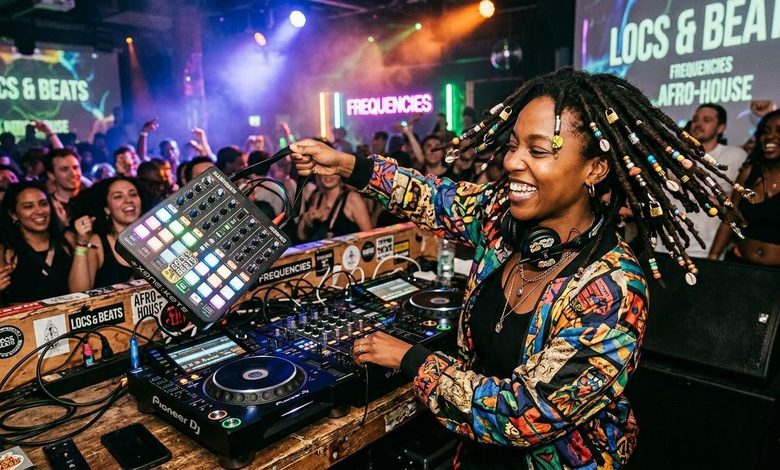
Part of the reason for this, I believe, is that the DJs themselves are mostly male. You hardly see a female DJ. I have only seen it happen maybe twice in my life, a female DJ actually behind the equipment. And the one time I really noticed it, she was balancing both male and female songs deliberately. She was doing the work of fairness. But when it is a male DJ, that balance disappears. So I do not think this is about training. I think it is about disregard, the same disregard that plays out across different professions where women’s work cannot be brought to the fore. It is mostly men, men, men, all over, everywhere you look. DJing is just one visible symptom of a much wider pattern.

And it does not stop at who gets played. It is also what gets played. Some of the songs by male artists are outright misogynistic. There is one song titled “Cast” by Shallipopi featuring Odumodublvck, and I will not pretend it does not disgust me, that goes, “If she no fuck, o, if she no suck (Prra) Who go pay for her wig and handbag?”
Writing this lyric in this piece makes my body crawl and ignite rage in me to clap the musician’s head between my hands. Arrant disrespect. I do not think people should be playing that kind of song at all, and yet that is exactly what gets played at “our” own events. Songs that objectify women, that reduce women to sex, that talk about women’s bodies with no respect whatsoever. And here is what gets me.
When it is a woman’s song that touches on sexuality, somehow it becomes a problem; somehow it becomes something to whisper about, over-scrutinized, over-sexualized in how people react to it. But when men do it, when men degrade women through the same lyrics, it passes as normal. Nobody blinks. So many respectful songs could be played instead, and still, this is what we get, over and over.
I remember once, I went to a small event, and I confronted the DJ directly. I said, ” This is a women’s event, you have to play mostly women’s songs.”
And the response I got back was this mocking, oh, the women’s song, is it because it’s a women’s event. As if playing women’s music at a women’s event was some kind of joke, some kind of unreasonable demand. That reaction alone tells you everything about how deep this disregard runs.
What I want, as a solution, is more female DJs. Not just female DJs for the sake of representation, but female DJs who are given the room to distinguish and scrutinize what is being played, who can filter out what is opportunistic, what is degrading, and choose songs that respect people. Even when a song touches on sexuality, it does not need to dehumanize or oversexualize anyone to do that. I want a party environment that treats male and female artists on an equal playing field, because every time a woman’s song gets played at a party, it creates visibility for female artists too, visibility they are otherwise denied. Beyond that, I want women’s events to patronise female DJs as a rule, not as some rare exception that happens only twice in a lifetime.
Because when I step back and look at this, it goes far beyond music. Women, professionals of all kinds, are still doing their best despite every systemic barrier placed in front of them to reach the top. And even when they do reach the top, even when they are visible, people try to water down their achievements.
She only got there because of this, she only succeeded because of that. People find ways to talk down what women have built with their own hard work. And when that happens, it pushes women right back into invisibility, no matter how hard they have worked to be seen. The DJ playing only male songs at a women’s event is not a small, isolated annoyance. It is another version of the same story: women’s work, women’s presence, women’s voices, pushed to the side again and again.