5 Must-Read Memoirs by African Women
|
Getting your Trinity Audio player ready...
|
Summary: In many patriarchal societies, silence is used to control women. Hence, conversations about sexual pleasure, femicide, reproductive health, and trauma are often treated as taboo or shameful. In this article, Naija Feminists Media spotlighted the unashamed stories of African women who tell their stories to become active subjects who owns her narrative.
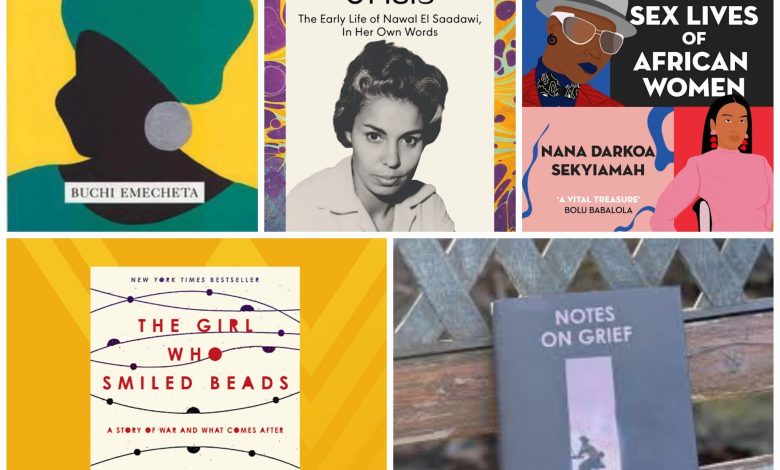
Historically, women’s bodies and lives have been written about, regulated, and defined by men, turning them into passive objects at the whims of patriarchy. To overturn this discrimination, feminist proponents state that women need to openly tell their stories unashamedly. This is because storytelling allows them to own, design, and reclaim their autonomy. Within the context of literature, many African women have been following this trend accordingly. Below are 5 memoirs authored by African women.
- Head Above Water – Buchi Emecheta (Nigeria)
Head Above Water is a 1986 memoir written by the beloved Nigerian novelist Buchi Emecheta. The book documents her remarkable life journey from her early days in Nigeria to her harrowing struggles as a single mother in London, and eventually her triumph of being one of the most world-renowned authors. Through her personal experience, Buchi uses “Head Above the Water” to explore themes like patriarchy, discrimination, motherhood, African identity, feminism, and living as a Black woman in a Western country.
Her memoir evokes emotions due to its honest, layered documentation of the life she truly lived. For instance, she had been battling patriarchal structures from a young age since the time she showed interest in education. Then, the same institution left her pregnant, deserted, and single-handedly responsible for five children who were under the age of six when she was just 22 years. But the triumph of the book lies in her sheer determination to overcome her circumstances and reject the system that seeks to constrain her. Her memoir ends with the victorious story of an acclaimed author.


- A Daughter of Isis – Nawal El Saadawi (Egypt)
In the modern Arab world, Nawal El Saadawi is widely recognised as one of the most influential, impactful, and pioneering writers. She is an Egyptian feminist literary giant who has authored over 50 books and famously uses her writings as a direct weapon to challenge patriarchy, oppression, and systematic violence against women. In her memoir, A Daughter of Isis, she writes a beautifully painful account of her childhood and early adulthood in a patriarchal Egyptian village.
The book detailed the poignant recollections of systemic violence against women, including her personal, traumatic experience of female genital mutilation (FGM) at seven years old. It also explores themes like body autonomy, gendered roles, education, child marriage, and women’s identity. A very interesting aspect of her memoir is how her female genital mutilation (FGM) experience on a cold bathroom floor at age seven became the major factor leading to her expertise as a medical doctor, finally using science to dismantle the cultural and religious justifications for modifying and controlling women’s bodies.
- The Girl Who Smiled Bead – Clemantine Wamariya (Rwanda)
In 1994, when the Rwanda genocide began, six-year-old Clemantine and her fifteen-year-old sister, Claire, were separated from their parents. They fled their comfortable home in Kigali and travelled through seven countries: Burundi, Zaire (now DRC), Tanzania, Malawi, Mozambique, South Africa, and Zambia before finally being granted refugee asylum in the United States.
In the memoir, Clemantine recollects the brutal refugee camps, severe hunger, imprisonment, and violence amidst their quest for survival. The book explores themes like childhood innocence and trauma, stolen identity, war, loss, sisterhood, and reclamation of self. It also critiques how whites often consume trauma stories for personal inspiration without making real structural changes. The narrative is a testament to the pain women endured in the reality of war.
- The Sex Lives of African Women (Nigeria)
The Sex Lives of African Women is a 2021 memoir edited and curated by Ghanaian feminist writer and activist Nana Darkoa Sekyiamah. The book is a compilation of intimate, unfiltered, and deeply detailed experiences of the sex lives of 30 Black, African, and Afro-descendant women across the globe.
It explores diverse themes of sexual identity, liberation, relationships, and the reclamation of bodily autonomy. Each woman opened up about what sex meant to them, while defying the accustomed African taboo associated with discussing the subject. It’s a remarkable book that interrogates sex through the lens of liberation, breaking taboos, and seeking pleasure entirely on one’s own terms. Read the review here.
- Notes on Grief – Chimamanda Ngozi Adichie (Nigeria)
Notes on Grief is a memoir written by renowned Nigerian author Chimamanda Ngozi Adichie. It chronicles the period of profound loss of her father Prof James Nwoye Adichie, during the COVID-19 pandemic. It examines what grief does to the body, memory, family relationships, and self. In her book, Chimamanda writes about how grief reshapes her identity as a daughter and how women often become custodians of family memory and emotional labour. Through the book, the author critiques the societal expectations of public mourning. Overall, the book is a hallmark of the author’s navigation of loss and grief.