“Surrogacy Should not Exist in Nigeria” — Public Health Expert Chinonso Uche

|
Getting your Trinity Audio player ready...
|
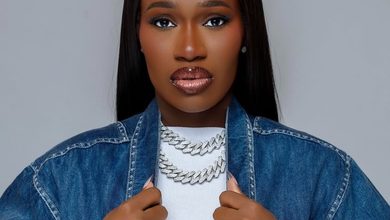
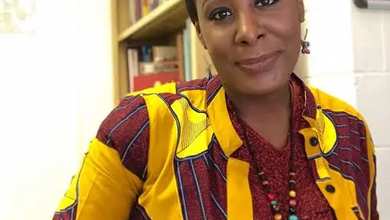
Chinonso Helen Uche, popularly known as Nurse Nonso, is a registered nurse licensed to practice in Nigeria, the United Kingdom, and the United States. She is also a licensed midwife in Nigeria and is currently completing the final requirements to obtain her midwifery license in the United Kingdom. With a Master’s degree in International Public Health, she has spent years advocating for improved maternal and child health outcomes, particularly in Nigeria, where maternal mortality and morbidity rates remain a major public health concern.
Nurse Nonso is also a vocal critic of the growing surrogacy industry in Nigeria and beyond. Through her social media platforms, she amplifies the experiences of women who have suffered trauma, neglect, exploitation and serious health complications as surrogate mothers. As Nigeria emerges as the second most popular destination for international surrogacy arrangements, concerns about the commodification of babies and the exploitation of vulnerable women have become more prominent.
In this interview, Nurse Nonso shares her perspective on the surrogacy industry, discusses its impact on women, and explains why she believes legislative measures are needed to address the challenges associated with the practice.
Nurse Nonso Speaks on Surrogacy and Surrounding Exploitation in Nigeria
- As a midwife and public health professional, what are your overall thoughts on surrogacy, especially within the Nigerian context?
As a registered midwife who has practised midwifery in Nigeria and has seen how poor maternal healthcare services are, which has led to a rise in maternal mortality among women in Nigeria, I believe surrogacy in Nigeria is not what the country is ready for. As someone who has been in contact with surrogates, the exploitation and poor aftercare they receive make me believe surrogacy needs a very strong legal framework with monitoring and proper documentation if it is ever to be done. Better still, for surrogacy not to exist, because why should a woman end her life just to help another person have a child?

- In your opinion, how is surrogacy currently being practised in Nigeria, and what are some of the major concerns you have observed?
From the surrogates I have been in contact with, who have shared their stories and evidence with me, surrogacy has a very grey area in Nigeria with no legal framework, making it very exploitative. Agents lure women with money to carry babies, but in the end, some are not paid, some lose their lives, and some develop complications after birth. The complications the women suffer are also not managed, as they are made to sign ridiculous contracts stating that after the delivery of the babies, they are not to contact the agency anymore, even if they have complications related to the surrogacy.
- From your experience and conversations with surrogate mothers, what are some of the most heartbreaking or baffling things women have told you about their experiences?
The most baffling thing I have heard is that the agents or hospitals that recruit these women keep them under house arrest for 9 months until the baby is born. They are not allowed a life while carrying the pregnancy. These agents also threaten the women with the police if they try to visit their families, saying they will have to pay all the expenses incurred to make them carry the babies. Another shock is that many women never get paid their money at the end of the day and have to beg the agents and parents to get paid. These women are also told they are being done a favour by being chosen to be surrogate mothers.
Lastly, these women are made to sign agreements only after the embryo has been transferred. At that point, they have no choice and cannot back out.
- You recently shared a case involving a surrogate mother who reportedly developed liver complications and died after a cesarean section. What does that situation reveal about the risks many surrogate mothers face?
The case of the lady who died after having a liver issue was one of the saddest times for me because three different surrogates who knew her personally all shared the story with me at different times without knowing others had shared it with me before, and their stories were consistent. She died due to the negligence of the agent who recruited them and kept them under house arrest. These surrogates confirmed that the girl had been complaining of being sick for days and asking to be taken to the hospital, but the agent ignored her. She was only rushed to the hospital days later when she was rolling on the floor, crying about abdominal pain and unable to even walk (she was carrying twins). From their statements, she did not make it to the hospital.
- What role do you believe foreign countries, such as the United Kingdom, play in the surge of surrogacy in Nigeria?
Foreign countries like the United Kingdom (UK), Canada and the United States are the biggest consumers of Nigerian surrogacy. It is cheap, and the lack of a legal framework favours them. The UK practices altruistic surrogacy, but when families from the UK come to Nigeria, they engage in commercial surrogacy, then go to court and ask the surrogate to tell the judge it was done willingly (these are part of the agreements; otherwise, the surrogate will not get her money paid). So the women lie in court, but their agreement states otherwise.
Surrogacy in Nigeria is quite easy, and that is why it is now one of the most popular destinations for foreign parents. Also, parents can ask agencies to transfer as many as five embryos, and you see these women carrying three to four babies.
- There have been reports of legal action connected to your advocacy and statements on surrogacy. What exactly is the lawsuit about, and how has it affected you personally and professionally?
I have had quite a few issues against me due to my advocacy online. I have faced so many threats to my life from parents in the UK who use one of the agencies I called out. I have a lawsuit for human rights violation; according to the surrogate agency that sued me, they claimed I reported them to the Nigerian Police and that the manager of the surrogate facility was arrested.
In a bid to shut me up, people have contacted me and threatened to report me to the NMC UK to get my license revoked. Some are threatening to report me to the Home Office for deportation. Also, some agencies are circulating a voice clip, which I sent to a surrogate who reached out to me, complaining that she was suicidal for being under house arrest. I advised her to leave, and if she needed help, I could find agencies to help her.
Now, they are pushing the narrative that I am asking the girl to bring me the child so I can sell the child to some agency. The truth is that I am human, and yes, it has had a big impact on me, and at some point, I wanted to stop for my own safety. But the number of women reaching out keeps increasing, and I have to face it head-on, no matter what it will cost me.