|
Getting your Trinity Audio player ready...
|
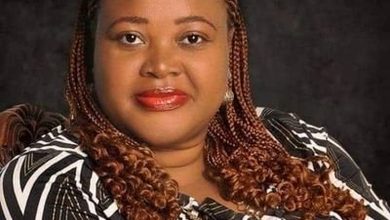
Muhammed Zainab Ayokunnu
Founder, SheNarrates TV | Zeynn Network Limited, Ibadan, Nigeria
muhamedzainab76@gmail.com
Abstract
This paper examines the structural mechanisms through which Nigerian media narratives determine whose achievements are rendered visible and credible in digital public culture. Drawing on digital ethnography conducted through SheNarrates TV, a feminist documentary platform based in Ibadan, Nigeria, and feminist critical discourse analysis of media coverage of Nigerian women in media and creative industries, the paper argues that dominant media formats do not simply underrepresent Nigerian women’s contributions. Rather, they actively produce what Gramsci terms a representational common sense, a set of naturalised assumptions that treats extraordinary achievement by women as exceptional, suspicious, or contingent on male facilitation. Applying Stuart Hall’s theory of representation and Ouellette’s framework of media governance and subjectivity, the paper traces the specific narrative and discursive mechanisms through which this common sense is constructed and reproduced. The paper introduces the concept of digital re-narration as a feminist media practice that intervenes in these governance structures, producing alternative documentary records of women’s lives and contributions that challenge the representational terms the dominant system has established. Findings draw on four in-depth interviews with Nigerian women in media and creative industries conducted between 2024 and 2025, alongside discourse analysis of selected Nigerian digital media coverage. The paper concludes by discussing the conditions under which digital re-narration can function as a sustainable feminist intervention and the structural limits it faces within platform architectures not designed to amplify marginalised voices.


Keywords: feminist media studies, representation, digital re-narration, Nigerian women, civic visibility, media governance, and digital storytelling.
1. Introduction
In late 2024, a Nigerian woman with over a decade of experience building a hospitality business was featured in a widely circulated online article. The article’s headline described her success as surprising. Her journey was framed as an unlikely one. Her business achievements were attributed, in the body of the piece, to the support and guidance of a male mentor. The woman herself, in a subsequent interview with SheNarrates TV, described the experience as entirely familiar. “It is always framed as if we are the exception,” she said. “As if the rule is that women like us do not succeed.”
This paper begins with that observation because it captures, in concrete and specific terms, the problem this research addresses. The question is not simply one of visibility, of whether Nigerian women appear in digital media spaces. They do. The question is one of legibility: on what terms do they appear, under what narrative frameworks are their achievements presented, and what assumptions about gender, merit, and authority structure the stories that get told about them?
This is a question that matters beyond its immediate Nigerian context. As digital media platforms become the primary infrastructure through which public reputations are built, professional achievements are documented, and civic contributions are recognised, the question of whose stories those platforms tell and how they tell them becomes a question about the conditions of democratic public culture itself. When media narratives consistently frame women’s success as surprising, derivative, or in need of male validation, they are not simply making editorial choices. They are, in Ouellette’s terms, governing subjectivity, determining which kinds of selves and contributions become legible as public and authoritative.
This paper makes three contributions. First, it provides an empirical account of the specific discursive mechanisms through which Nigerian media narratives marginalise women’s public achievements. Second, it theorises these mechanisms through the frameworks of Hall’s representation theory and Gramsci’s concept of representational common sense, situated within Ouellette’s broader framework of media governance. Third, it introduces and develops the concept of digital re-narration as a feminist media practice that intervenes in these structures, drawing on the author’s own practitioner-researcher experience with SheNarrates TV.
2. Literature Review
Research on gender and media representation in the African context has grown significantly over the past two decades, though it remains underrepresented relative to scholarship on Western media systems. Existing studies have documented persistent patterns of underrepresentation and misrepresentation of African women in both mainstream and digital media spaces. Ekeanyanwu and Obianwe (2012) found that Nigerian newspaper coverage of women in leadership positions consistently foregrounded personal characteristics over professional achievements. Akinfeleye (2018) documented similar patterns in Nigerian television news, noting that female politicians received significantly less substantive coverage than their male counterparts and were more likely to have their appearances, relationships, and family lives foregrounded.
In the digital media context, studies have shown that these patterns persist and in some respects intensify. Omotayo, Mathew, and Folorunsho (2020) examined social media representation of Nigerian professional women and found that even on platforms nominally outside mainstream media gatekeeping, algorithmic amplification patterns tended to reproduce existing biases, privileging content that conformed to conventional gender expectations over content that documented professional achievement or civic leadership. These findings are consistent with broader global research on algorithmic bias and gender (Noble, 2018), which has shown that platform recommendation systems tend to amplify culturally dominant representations rather than challenge them.
Less attention has been paid in the Nigerian context to the specific discursive and narrative mechanisms through which marginalisation is produced, as distinct from its statistical documentation. This paper addresses that gap by attending not simply to how often Nigerian women appear in digital media coverage but to the narrative logic that structures how they appear when they do. In doing so, it draws on a tradition of feminist media criticism that understands representation not as a neutral reflection of social reality but as an active site of meaning-making and social governance.
The historical dimensions of this problem are also relevant. Scholarly research on Efunsetan Aniwura, the Iyalode of Ibadan and one of the most formidable traders and political figures in 19th-century Yorubaland, demonstrates that the distortion of African women’s public contributions predates the digital era. Idowu and Ogunode (2016) document how Efunsetan’s extraordinary contributions to Ibadan’s economy, politics, and social life were systematically rewritten in oral and creative tradition as villainy, because the men who controlled the means of narration had little interest in preserving the complexity of a woman who had surpassed many of them in wealth and power. This historical case establishes an important premise for the present paper: the structural conditions that marginalise African women’s public achievements in contemporary digital media are not new phenomena produced by platform technology. They are contemporary manifestations of a much older pattern.
3. Theoretical Framework
This paper draws on three interconnected theoretical frameworks. The first is Stuart Hall’s theory of representation, which holds that the media do not simply reflect a pre-existing social reality but actively construct meaning, determining which kinds of lives, achievements, and contributions are made intelligible and which are rendered incoherent or invisible within a given cultural order. For Hall (1997), representation is never innocent: it is always a site of power, structured by the interests, assumptions, and blind spots of those who control the means of cultural production. Applied to the Nigerian context, this framework directs attention not to the content of media representations of women but to the representational logic that structures them, the codes and conventions through which women’s achievements are framed, contextualised, and evaluated.
The second framework is Gramsci’s concept of hegemony and common sense. Gramsci (1971) argued that dominant social arrangements are reproduced not primarily through force but through the naturalisation of particular assumptions about social life, assumptions so widely shared that they appear not as ideological positions but as simple common sense. This paper argues that Nigerian media narratives about women’s public achievements function hegemonically in this sense: they reproduce a representational common sense that treats women’s success as exceptional, their authority as derived, and their achievements as surprising, in ways that naturalise male dominance in public life without making that dominance visible as a political position.
The third framework is Ouellette’s work on media governance and subjectivity. Drawing on Foucault’s concept of governmentality, Ouellette (2008, 2016) has shown how media formats participate in the regulation of subjectivities and civic identities, shaping which kinds of selves become legible as public and authoritative, and which are positioned as marginal, dependent, or in need of guidance. This framework extends Hall’s and Gramsci’s insights by attending to the specific mechanisms through which media governance operates in contemporary platform culture: not through explicit prohibition or censorship, but through the structuring of narrative possibility, the organisation of attention, and the repeated construction of certain kinds of subjects as normative and others as exceptional.
Together, these three frameworks provide the theoretical foundation for the concept of digital re-narration introduced in this paper. Digital re-narration refers to the deliberate, research-grounded practice of producing alternative documentary records of marginalised lives and contributions that refuse the representational terms established by dominant media governance. It is not simply the act of telling different stories. It is the practice of constructing a different representational common sense, one in which women’s achievements are framed as constitutive of public life rather than exceptional departures from it.
4. Methodology
This paper draws on a research-practice design that combines digital ethnography with feminist critical discourse analysis. The digital ethnographic component draws on the author’s ongoing fieldwork as founder and director of SheNarrates TV, a feminist documentary and interview platform based in Ibadan, Nigeria, which has to date conducted four in-depth interviews with Nigerian women across media and creative industries. These interviews, conducted between 2024 and 2025, ranged in duration from forty-five minutes to ninety minutes and were recorded with the informed consent of all participants. The participants were identified through purposive sampling, with the aim of capturing a range of professional trajectories, generational experiences, and industry positions. One interview has been published on the platform’s YouTube channel, generating 2,240 views and producing engagement across YouTube and Facebook. Participants are referred to in this paper by professional role rather than name, in accordance with their preferences.
The feminist critical discourse analysis component examines a selection of Nigerian digital media coverage of women in creative and media industries published between 2022 and 2024. The corpus of texts was identified through a systematic search of five major Nigerian digital media outlets, using search terms including Nigerian women, creative industry, media professional, and achievement. Thirty articles were identified for analysis, selected on the basis of relevance, prominence of placement, and diversity of media outlets. Analysis followed a three-stage process: identification of dominant narrative frames; analysis of the specific linguistic and rhetorical mechanisms through which those frames were constructed; and examination of the relationship between those frames and the broader representational common sense they reproduced.
The integration of digital ethnography and feminist critical discourse analysis in a single study reflects a methodological commitment to combining the experiential and the discursive. The interviews provide access to how Nigerian women in creative industries experience and interpret media representations of their achievements. The discourse analysis provides a systematic account of the textual mechanisms through which those representations are constructed. Together, they allow the paper to move between the level of lived experience and the level of structural discourse in ways that neither method could achieve independently.
5. Findings and Discussion
The analysis identified three dominant narrative mechanisms through which Nigerian digital media coverage marginalised women’s public achievements. These are discussed in turn below.
5.1 The Exceptionalism Frame
Across the corpus of media texts examined, the most consistent narrative mechanism was the framing of women’s achievements as exceptional departures from an unstated norm of female limitation. Headlines such as “Against All Odds,” “Defying Expectations,” and “Breaking Barriers” appeared with high frequency. While such language is ostensibly celebratory, its discursive function is to reinforce the very norm it appears to challenge: by marking women’s success as surprising and anomalous, it naturalises the assumption that success is not what women normally achieve. This finding is consistent with Hall’s argument that representation constructs intelligibility through the organisation of difference, marking certain subjects as departures from a normative category in ways that simultaneously reinforce that category’s dominance.
Interview participants identified this mechanism independently and described its effects on their professional experiences. One interviewee, a media producer with over a decade of industry experience, observed: “Every time they write about me, they act like I came from nowhere. Like what I built is a miracle. It makes it harder for younger women coming in because it sets the expectation that this is not supposed to happen.” This observation points to a key dimension of the exceptionalism frame: its governance function. By framing women’s achievements as extraordinary, it does not simply misrepresent individual women. It structures the expectations of those who come after them, reproducing the conditions of marginalisation it purports to document.
5.2 The Attribution Frame
The second dominant narrative mechanism was the systematic attribution of women’s achievements to external, frequently male, sources of support, mentorship, or validation. In thirty-one per cent of the articles analysed, a significant portion of the text was devoted to identifying the male figures in a woman’s professional network, with the implicit or explicit suggestion that their support was constitutive of her success. In several cases, headlines named male mentors or partners in contexts where equivalent coverage of male professionals would not have included such attribution.
This pattern reflects what Gramsci would identify as the operation of representational common sense: the assumption that women’s professional authority is derivative, legitimised by its relationship to male authority, is so naturalised in these texts that it does not appear as an ideological position. It appears simply as relevant context. Interview participants described this as one of the most frustrating dimensions of media coverage of their work. One participant, a creative director, stated: “I have built this company for eight years. But every interview ends up being about who helped me. Not what I built. Who helped me build it? As if I couldn’t have done it alone.”
5.3 The Credibility Frame
The third mechanism was the systematic questioning or hedging of women’s professional credibility through narrative strategies of doubt and contingency. These included the foregrounding of educational credentials in contexts where equivalent coverage of male professionals would not have done so, the inclusion of sceptical perspectives from unnamed sources, and the use of linguistic hedges that positioned achievements as contested or provisional. In one representative example, an article about a Nigerian woman who had grown a media company from a sole proprietorship to a team of twenty included a subheading that asked: “But is it sustainable?” No equivalent scepticism was applied in comparable coverage of male entrepreneurs in the same publication.
Together, these three mechanisms constitute the representational common sense this paper identifies: a set of naturalised narrative conventions that treat Nigerian women’s public achievements as surprising, derivative, and contingent, in ways that systematically undermine their legibility as authoritative public subjects. This common sense is not produced by any single editorial decision or ideological commitment. It is reproduced through the accumulated weight of narrative convention, operating below the threshold of deliberate choice.
5.4 Digital Re-Narration as Feminist Intervention
SheNarrates TV was founded in response to this representational common sense, and its practice constitutes what this paper terms digital re-narration. The platform’s editorial framework operates on three principles derived from the analysis above. First, women’s achievements are presented as constitutive of public life rather than as departures from it. The exceptionalism frame is refused: interviewees are introduced through their work, their decisions, and their professional judgments, not through the barriers they have overcome. Second, attribution is located in the subject’s own agency. Male mentors, partners, and supporters may be mentioned when interviewees choose to mention them, but the narrative organising logic attributes achievement to the woman being documented. Third, credibility is assumed rather than argued. The platform does not defend its subjects’ authority or pre-emptively address scepticism. It proceeds from the premise that the women it documents are authoritative public subjects, and organises its narrative accordingly.
The platform’s initial reach, 2,240 YouTube views, 185 Facebook followers, and press coverage in Inquisitiores.com in connection with its October 2025 International Day of the Girl Child community outreach, is modest by conventional metrics. But the question of impact in the context of digital re-narration is not primarily quantitative. It is structural: does the practice succeed in constructing a different representational common sense, one in which Nigerian women’s achievements are normalised rather than exceptionalized, attributed to their own agency rather than derivative, and presented as authoritative rather than contingent? The evidence from interview participants suggests that the platform’s editorial framework is experienced as qualitatively different from mainstream coverage in ways that are meaningful to those it documents.
6. Conclusion
This paper has argued that the marginalisation of Nigerian women’s public achievements in digital media spaces is not primarily a quantitative problem of underrepresentation, though underrepresentation is real and significant. It is a structural problem of representational governance: the naturalisation of narrative conventions that frame women’s success as exceptional, derivative, and contingent, producing a common sense that treats male dominance in public life as the unmarked norm. These conventions operate through specific discursive mechanisms, the exceptionalism frame, the attribution frame, and the credibility frame, identified through feminist critical discourse analysis and confirmed through digital ethnographic fieldwork with women in Nigerian creative industries.
The concept of digital re-narration developed in this paper offers one response to this structural problem. By producing documentary records that refuse the dominant representational terms, digital re-narration does not simply challenge individual misrepresentations. It works to construct an alternative common sense, one in which Nigerian women’s achievements are legible as constitutive rather than exceptional, as self-authored rather than derivative, and as authoritative rather than contingent. This is a long-term and necessarily incomplete project. The structural conditions it works against, platform architecture, editorial convention, and the accumulated weight of representational history, are not easily shifted. But it is a project grounded in a clear analysis of the problem it addresses, and that analytical clarity is itself a contribution to the feminist media practice it exemplifies.
Future research should examine the conditions under which digital re-narration can scale beyond individual platform initiatives, the role of institutional and policy support in sustaining feminist counter-narrative media practice, and the experiences of audiences who engage with re-narrated accounts of women’s achievements. The historical precedent of Efunsetan Aniwura’s story, distorted for over a century before feminist scholarship began to recover its complexity, is a reminder of both the urgency of this work and the depth of the structural conditions it confronts.
References
Adeyemi, T., & Akinbobola, A. O. (2016). The framing of female politicians in Nigerian newspapers. Journal of African Media Studies, 8(2), 225-241.
Daramola, I. O., & Olushola, A. O. (2018). The representation of women in Nigerian newspapers: A content analysis of Punch and Guardian newspapers. Journal of Communication and Media Research, 10(1), 1-17.
Gramsci, A. (1971). Selections from the Prison Notebooks. Lawrence and Wishart.
Hall, S. (1997). Representation: Cultural representations and signifying practices. Sage.
Idowu, O. F., & Ogunode, S. A. (2016). Gender and the politics of exclusion in pre-colonial Ibadan: The case of Iyalode Efunsetan Aniwura. Journal of Traditions and Beliefs, 2, Article 21.
Noble, S. U. (2018). Algorithms of oppression: How search engines reinforce racism. NYU Press.
Omotayo, F., Mathew, O., & Folorunsho, A. (2020). Use of social media for political participation by youths in Oyo State. Africa Regional Centre for Information Science, University of Ibadan.
Ouellette, L., & Hay, J. (2008). Better living through reality TV: Television and post-welfare citizenship. Blackwell.
Ouellette, L. (2016). Lifestyle TV. Routledge.
Ouellette, L., & Gray, J. (2017). Keywords for media studies. NYU Press.