|
Getting your Trinity Audio player ready...
|
Summary: Amid the growing trend of femicide in Nigeria, Naija Feminists Media spoke to the Founding Director of DOHS Cares Foundation, Ololade Ajayi, who shared insights on the disturbing pattern of femicide. She called on the government to provide legislation that would specifically distinguish femicide as a gendered crime, enabling proper national strategies to address the crime.
On Thursday evening, May 21, 2026, Onyema Okonkwo and Emmanuel Onyekachi attacked, raped and brutally murdered 21-year-old nursing student, Wendy Achumba, in her private residence at Umulogho, Obowo Local Government Area of Imo State. Their obnoxious reason for killing her was that she rejected Onyema’s romantic advances towards her. Similarly, Blessing Moshood, a 29-year-old sociology graduate of Kogi State University, was murdered and her body dumped in a canal in Jikwoyi, Abuja, on the same night as Wendy’s death. While many might perceive the women’s deaths as unfortunate accidents, statistics reveal a striking contrast: every 49 hours, a woman or girl is killed in Nigeria because of a gender-related motive.
Consequently, Naija Feminists Media had a chat with Ololoade Ajayi, the Executive Director at DOHS Cares Foundation, on the reality of femicide, which is men’s intentional killing of women and girls in their lives.
NFM Chats with Ms Ololade Ajayi, DOHS Cares Foundation Director


1. As the founder of DOHS Cares Foundation, how would you describe the current state of femicide in Nigeria, and what are the major concerns you have observed about it?
With a woman or girl being killed every 49 hours due to a gender related motive in Nigeria, Femicide has reached an alarming level and should be treated as a national emergency. Through our Femicide tracker, we have observed a disturbing pattern of women and girls being killed simply because they exercised their right to reject advances, leave abusive relationships, or assert their autonomy. Many of these deaths are preventable, yet they continue to occur with shocking frequency.
One major concern is the normalisation of male violence against women. Cases of femicide are often dismissed as domestic disputes, crimes of passion, or isolated incidents rather than being recognised as part of a broader systemic problem rooted in gender inequality and misogyny. Another concern is the culture of impunity. Families of victims frequently struggle to access justice due to weak investigations, delayed prosecutions, and social pressure to remain silent. Too often, warning signs are ignored until a woman loses her life. Femicide is not only a women’s issue; it is a human rights crisis that affects families, communities, and the nation as a whole.
2. Recent data shows a significant rise in femicide. What does this tell us about the safety of women and girls in Nigeria?
It shows that home is the most dangerous place for a Nigerian woman. According to our femicide tracker, husbands account for the highest recorded femicide perpetrators, closely followed by boyfriends.
The rise in femicide sends a troubling message that many women and girls in Nigeria remain unsafe in spaces where they should feel most secure: their homes, schools, workplaces, and communities. It highlights the persistence of harmful gender norms that encourage entitlement, control, and violence against women.
The increase in reported cases may also indicate greater awareness and improved documentation by civil society organisations and the media. However, even with increased reporting, many cases still go undocumented, suggesting that the actual scale of the problem may be much higher. The growing numbers reveal significant gaps in prevention, protection, and accountability systems. They tell us that many women who report threats, abuse, or stalking are not receiving adequate protection before violence escalates. They also remind us that safety can not be measured only by the absence of conflict; it requires systems that actively protect women’s rights and dignity.
3. How would you assess the Nigerian government’s response to femicide so far, and what are the major gaps in government efforts to prevent and respond to femicide?
While there have been some positive efforts, including the adoption of laws such as the Violence Against Persons (Prohibition) Act and increasing public discussions around gender-based violence, the overall response to femicide remains inadequate
One major gap is the absence of a legal framework that specifically recognises and tracks femicide as a distinct crime. Without clear recognition, it becomes difficult to gather accurate data, identify patterns, and develop targeted interventions. There is also a lack of coordinated response among law enforcement agencies, social services, healthcare providers, and the justice sector.
Another challenge is the weak implementation of existing laws. Survivors and victims’ families often face barriers when seeking justice, including delays, poor investigations, insufficient victim support services, and inadequate funding for protection mechanisms. More investment is needed in prevention, survivor support, public education, and accountability systems.
4. What changes would you like to see in how journalists report cases of violence against women?
The media plays a critical role in shaping the public understanding of violence against women. I would like to see the reporting of gender related killings of women and girls as Femicide in the media as well as more survivor-centred and gender-sensitive reporting that focuses on accountability rather than sensationalism.
Journalists should avoid language that blames victims or justifies perpetrators’ actions. Terms such as “crime of passion” can minimise the seriousness of femicide and shift attention away from the root causes of violence. Reporting should provide context about broader patterns of gender-based violence and highlight available support services.
I would also like to see stronger investigative journalism that follows cases beyond the initial headlines. Too often, public attention fades after a tragic incident, while families continue to seek justice. Responsible reporting can help sustain public awareness, encourage accountability, and drive policy change.
5. What specific reforms, regulations, or policies do you believe the Nigerian government urgently needs to introduce to prevent femicide?
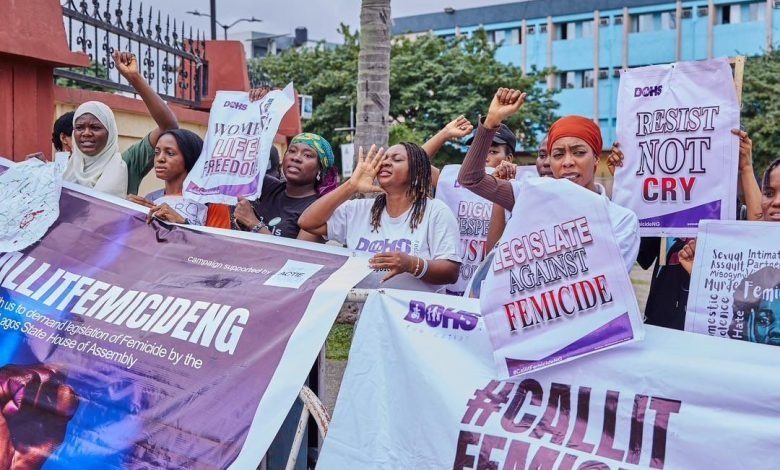
Nigeria urgently needs legislation that specifically recognises and addresses femicide. Such a framework should establish clear definitions, strengthen data collection, and ensure enhanced penalties for gender-related killings.
There should also be mandatory risk assessment and protection mechanisms for women facing credible threats, including emergency protection orders and stronger enforcement measures. Law enforcement officers, prosecutors, and judges should receive specialised training on handling cases involving violence against women.
Additionally, the government should establish a national femicide observatory or database to track incidents and identify trends. Sustainable funding should be allocated to shelters, legal aid services, psychosocial support, and prevention programmes. Policies should also prioritise education initiatives that challenge harmful gender norms and promote healthy relationships.
6. Beyond legislation, what preventive measures are urgently needed to protect women and girls?
Prevention requires a whole-of-society approach that addresses the root causes of violence. Comprehensive education on gender equality, consent, conflict resolution, and healthy relationships should be integrated into schools and community programs. Community engagement is also critical. Traditional leaders, religious leaders, educators, parents, and young people must be involved in challenging harmful attitudes that normalise violence. Men and boys should be actively engaged as allies in prevention efforts.
There is also an urgent need to strengthen support systems for women at risk. Accessible shelters, counselling services, emergency hotlines, and economic empowerment opportunities can help women leave dangerous situations before violence escalates. Finally, we must build a culture where threats, stalking, and abuse are taken seriously and addressed early rather than ignored until they result in tragedy.