|
Getting your Trinity Audio player ready...
|
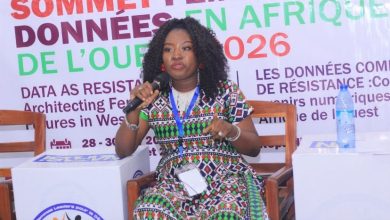
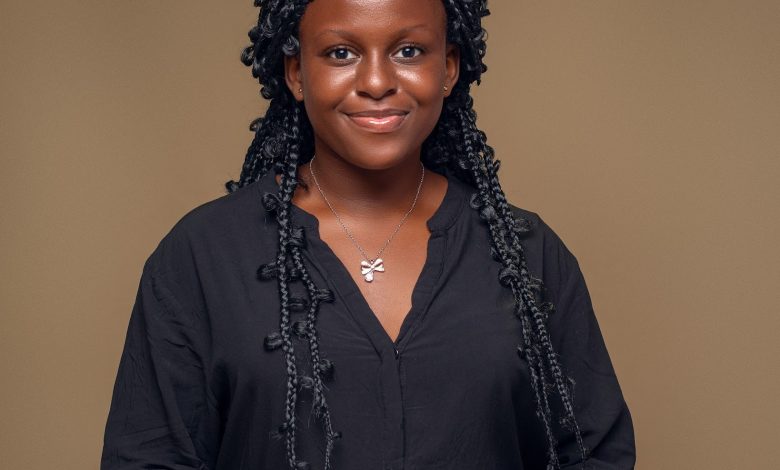
Boluwatife Soyemi is a woman of many hats. She is a chartered accountant, writer, marketer, educationist and a feminist. If she had to summarise herself in one sentence, she would say she is “a creative soul who loves doing good work.” Boluwatife believes one of society’s biggest problems is that people are taught not to ask questions.
In this edition of Feminist Spotlight, speaking to Naija Feminists Media, Boluwatife reflects on why questioning long-held beliefs has become central to both her work and her politics.
- What has your journey into writing, marketing, education and feminist advocacy looked like so far?
I’ve loved reading and writing since I was a child. They came naturally to me and became one of my earliest forms of expression. I remember filling 40-leaf notebooks with stories and watching them get passed around classrooms until they became almost unrecognisable. That never bothered me because I was simply happy people were reading them. I didn’t begin earning from writing until 2020, when I got my first freelance opportunity through a network, followed by another on Twitter. Around the same time, I completed my undergraduate degree in Management and Accounting, became a chartered accountant and continued building a career across different industries, including fintech, e-commerce, Web3, fashion, women’s health, branding and education. Alongside that, I’ve continued researching and learning about feminist education. One thing I’ve come to understand is that recognising a patriarchal practice doesn’t automatically mean you’re free from it. I’m still unlearning, relearning and growing.
- Throughout your work, you often encourage people to question ideas that society accepts as normal, especially when it comes to women and girls. Why do you think challenging the normal is such an important part of feminist work?
I think, as a society, we’re deeply conditioned not to ask questions. You see it in the way parents treat inquisitive children, in how teachers shut down curiosity, and in how elders sometimes rely on age to avoid accountability, presenting their opinions as unquestionable even when they’re wrong. That environment makes it much easier for patriarchy and its institutions to survive because people are taught that questioning is disrespect rather than necessary. I recognised this from a very young age. I could see that many of the ideas shaping women’s lives were harmful, even if people treated them as normal. I won’t pretend I was never afraid to speak up. I was. I was told I was too outspoken, and like many women, I was conditioned to fear what would happen if I challenged the harm I saw around me. But in 2020, I realised something. If everyone who knew they needed to speak up stayed silent out of fear, nothing would change. That realisation didn’t suddenly make speaking up easy, but it made staying silent much harder.
- In your view, why do conversations about gender stereotypes and consent continue to meet resistance?
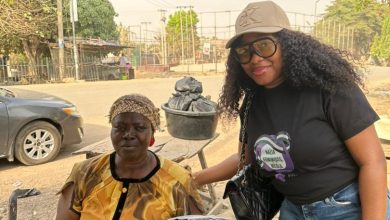
These conversations continue to face resistance because people do not want to engage in introspection. The system that takes the most from them gives them some cagey benefits, so they focus on the benefits and ignore what it steals from them. It is also caused by an unwillingness to change, because they’ve believed whatever they say is right, no matter how flawed it might be. For example, I went on a walk against rape and sexual assault, and while we were telling the bike men at the park to train their sons well and protect them so they won’t be exposed to harmful practices and therefore take it out on women, their response was that women should stop wearing short skirts, that if a woman wears a short skirt, she’s asking for it.
We told them that was not true and showed them the “What Were You Wearing” exhibit, and even then they said, ehn, that people in burkas can be tempting too, and it’s only the babies they have sympathy for, but it was most likely temptation from the devil. They still insisted that short skirts cause rape, and at some point, while trying to explain, the head of the garage shook his head like we were saying rubbish.
What he failed to understand is that the blame lies with the perpetrator only, and treating rape as a result of wearing short skirts is flattening the issue. It also affects women in many ways, because they want to be expressive in their style of dress. Nothing the victim does is a prerequisite for rape, and nothing should justify it. I keep going even when this pushback occurs because I believe the mind can be remodelled, and that coming to the right conclusion is possible.
- Looking at Nigeria today, what do you think is one of the most harmful beliefs or attitudes about women and girls that has become so deeply normalised that many people no longer recognise the harm it causes?
The idea that women should be raised to be submissive. We keep repeating stereotypes that women are more emotional, incapable of logical thinking, meant to remain calm in the face of disrespect, and expected to stay quiet. These ideas are rooted in bioessentialism, and as long as we continue to teach them, they will continue to endanger women. There’s a poem I often return to, “Even the Doves Learn Taekwondo” by April Ifunaya C. Izundu in her collection “Protectors and the Prey”.
It captures this reality beautifully. The poem imagines women as doves, raised to be gentle, taught to mistake exhaustion for sacrifice, and expected to carry the weight of the world while returning to a cage. No matter how beautiful that cage is, many of those doves return with broken wings. Many forget how to sing. Many only remember they have claws after the sky has moved on.
For women to be truly free, we cannot continue raising girls to believe they are less than anyone else or stripping them of their autonomy in the name of protection. No woman can ever satisfy patriarchy by bending herself to fit its expectations. The only way to overcome it is to challenge it, educate ourselves, and refuse to keep passing these ideas on to the next generation.
- As a writer, you understand the power of words and storytelling. How do you think language, media and everyday conversations influence the way society understands women’s experiences, and what responsibility do storytellers have in shaping those narratives?
I have many thoughts on this. Language, media and everyday conversations do a great deal in shaping how women’s stories and experiences are understood. When we’re engaging with people, we have to be mindful of the language we use. We don’t want to exclude people, whether they’re privileged or not, because we all need one another to learn, share opportunities and move forward together. Exclusionary language helps no one.
Another thing I think about often is the way the media, especially popular media, downplays sexual assault. I believe that is a reflection of the patriarchal system and, consciously or unconsciously, a way of defending perpetrators. If we’re looking to get justice for a woman who has been assaulted, we cannot begin with headlines like, “Lady who wore a spaghetti-strap top was molested at the market yesterday,” or, “Upstanding citizen, father of four, in court for possible assault.”
Headlines like these shift attention away from the person responsible and place it on the victim instead. When those kinds of narratives are repeated often enough, they teach people to blame women for the violence committed against them rather than holding perpetrators accountable. The stories we tell matter. The realities women face every day are already painful enough without adding sensationalism or misinformation. As storytellers, our responsibility is to be truthful, accurate and accessible.
We shouldn’t distract from the real issue with exaggerated details or misleading narratives because that only weakens public trust and makes it easier for people to dismiss women’s experiences. Good storytelling should bring people closer to the truth, not further away from it. As storytellers, it is important to be honest while covering these conversations. Our reporting should be clear, accessible and focused on the real issue at hand, rather than filled with distractions that take attention away from what women are actually experiencing.
- Finally, what gives you hope? As someone committed to using your voice and your work to challenge inequality, what would you like young women, and anyone committed to a more equal society, to hold on to as they find their own voice and navigate this work?
What gives me hope is seeing people change, even if it’s one person at a time. Every day, I see a small number of people begin to question things they once accepted without thinking because of the work I do. It may seem like a small number, but over time those conversations add up. That’s how change happens, one person, one conversation, one community at a time. To every opinionated girl or woman who has been made to feel like she should stay quiet, my advice is simple: speak up. Don’t let what society might say stop you. It becomes easier to speak about the things that need to change once you begin. You have a voice. Use it, and be free.