Over the past two years, Naija Feminists Media (NFM) has quietly become Nigeria’s foremost and most consistent feminist newsroom. A media house that does more than report events or present data. It investigates, advocates, educates, and mobilises.
Before the birth of NFM, Nigerian mainstream media historically and systematically reported women’s issues through the lens of patriarchal stereotyping, underrepresentation, and sensationalism. Gender-Based Violence (GBV) news was sensationalised rather than reported as a systemic issue; female celebrities, professionals, and creatives received media backlash reports focused heavily on their personal lives, attire, and relationship choices rather than their professional achievements; and maternal health stories focused on death tolls without interrogating the structural failures behind them. The consequence is the absence of women’s stories, context, and accountability.
While traditional reportage asked what happened? Naija Feminists Media arises to ask unique questions: Why did it happen? Who is most affected? Which systems enabled it? Whose voices have been ignored? These questions shift the focus from mere domestic violence to broader social, political, cultural, and economic structures that shape women’s everyday realities.
The Birth of Naija Feminists Media; Feminist Journalism Beyond Reporting

Naija Feminists Media (NFM) is a mainstream media platform founded in 2024. It works at the intersection of journalism, technological tools, and women’s rights to expose misogyny, improve women’s representation and portrayal in the media, dismantle misconceptions about African feminists’ representation, and empower women. It produces media content strictly from African women’s perspective, for Africans and those in the diaspora.
As a leading radical feminist media and women’s rights organisation, its mission is to promote gender equality, inclusivity, and expose and analyse the systemic patriarchal and misogynistic practices in Nigeria through evidence-based reporting. For two years, NFM has stayed true to its mission, producing investigative stories that expose the truth, feminist analysis that inspires, and women-centred vodcasts that spark conversations. Ultimately, Naija Feminists is solving the problem of disinformation as it relates to gender inequality and addressing the underrepresentation of black women’s voices in global gender issues.
When Stories Become a Tool for Change; Feminism Journalism as a Living Archive
As Naija Feminists Media marks two years of existence, its achievement is not the number of stories it has published. It’s the strong editorial dynamic that believes journalism should do more than inform the public. It challenges silence, questions unequal systems, amplifies overlooked voices, and reports stories that deserve to be told. For this crucial philosophy, the organisation has transformed from a newsroom and publisher of stories to an active participant in the pursuit of gender justice.
Its reporting has consistently centred on issues like femicide, maternal healthcare, political inequality, disability inclusion, and the achievements of African women despite residing in a patriarchal society. These are not isolated stories. They are windows into the structures that shape women’s everyday lives. A report on maternal healthcare becomes an examination of public health funding and access to quality medical care; a story on how X incentivises body shaming exposes how digital tools are weaponised against women.
For Naija Feminists Media, reporting women’s stories is not the end of the conversation. It is the beginning, where we build a strong, evolving archive of feminist resistance, social transformation, and real change in Nigeria.
Measuring Two Years of Impact: When Journalism Moves Beyond the Newsroom
The success of a newsroom is often measured in numbers: the number of stories published, website traffic, social media impressions, and audience reach. While these metrics remain important, they rarely capture journalism’s deeper value. The true measure of impactful journalism lies in its ability to influence conversations, challenge long-held beliefs, equip communities with knowledge, inspire action, and ultimately improve lives.
For the past two years, Naija Feminists Media (NFM) has measured its success through deeper value and impactful journalism. NFM has undoubtedly expanded our reach, published over a thousand women-centred stories and built a growing community of readers, journalists, advocates, and partners across Africa. The organisation’s most enduring achievement lies in how it made these stories travel beyond the newsroom into classrooms, policy discussions, digital platforms, and communities, and into the everyday lives of women and girls.
Through monthly X Spaces, NFM transformed social media into a platform for public education, where conversations on digital rights, under-discussed women’s health issues, women’s political rights, and others have brought together experts to challenge the long-standing normalisation of women’s exclusion. Rather than simply reporting these issues, these discussions examine the structural reforms needed to make digital spaces safer for women and girls and illuminate diagnostic delays and inadequate healthcare responses. In this sense, the organisation openly demonstrates that journalism is not limited to publishing articles; its greatest impact lies in creating spaces where knowledge is shared, silence is broken, misconceptions are corrected, and solutions are provided.
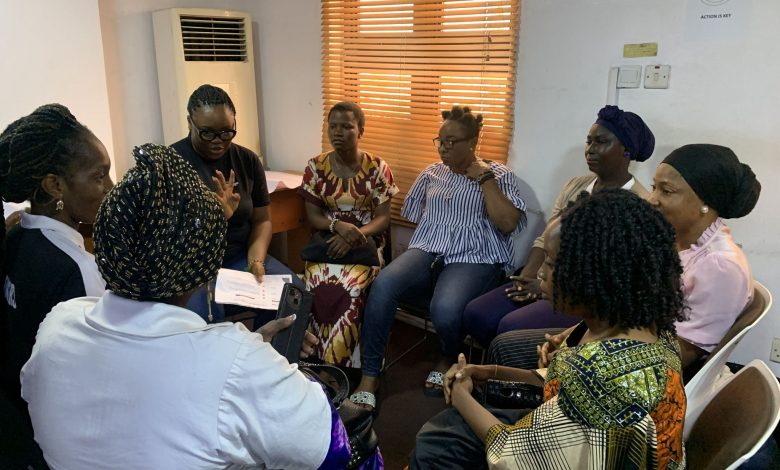
Recognising that impactful journalism requires more than producing stories, NFM made a strategic investment to train 15 female journalists to report gender issues ethically, accurately, and with depth. Through its 2025 Editorial Fellowship, media professionals from across Africa were trained on feminist reporting, investigative journalism, and narrative storytelling. The ripple effects of this fellowship include an award received by one of the fellows, Maryam Umar, for her story, “Bench by Culture: The Struggles of Female Sports Enthusiasts in Northern Nigeria,” which she was mentored during the training; another fellow’s work, Precious Obiabunmo was published by Minority Africa and another fellow, Barakat Sanni who served as the group leader for the Digital Rights and Safety subgroup during her time as an Oyo State Policy Advocacy Lab (OyoPAL) fellow. She launched an initiative, the SafHer Net project to translate these digital safety concepts into physical school outreach and virtual training programs for local educators.
NFM’s Impact Extends Beyond Online to Communities, Policy Debates
Naija Feminists Media’s participation in the Digital Rights and Inclusion Forum (DRIF) 2026 signalled an important evolution in the organisation’s advocacy. It positions feminist perspectives within debates that will increasingly define the future of governance, digital rights, and innovation across Africa.
Similarly, its advocacy has moved beyond digital platforms into schools, markets, and underserved communities, where information is paired with practical interventions. During Menstrual Hygiene Day, the organisation partnered with civil society organisations to provide menstrual hygiene education, distribute dignity kits, and promote conversations around menstrual health and period stigma among girls. These initiatives recognised that ending period poverty requires more than awareness; it also requires access to essential resources and accurate information.
Also, through the #GiveToGain initiative, NFM collaborated with partners to provide financial support for petty traders in Kubwa, acknowledging that women’s economic empowerment is inseparable from broader conversations about gender equality. These interventions illustrate a holistic understanding of feminist journalism and advocacy, one that recognises women’s economic security, quality health, education, and dignity as interconnected dimensions of gender equality and justice. These interventions also highlight the way NFM is not merely responding to today’s challenges but anticipating tomorrow’s.
As Naija Feminists Media enters its third year, its impact is beyond the stories it has published and the newsroom; its achievement lies in the conversations it has changed, the people it has empowered, and the future it continues to imagine: one where women’s voices are no longer an afterthought in journalism but an indispensable part of how society understands itself. And the living archive of women’s stories lives; a reminder that changing the stories a society tells is often the first step toward changing the society itself.