Engineered by Women, Run by Men: What Does Democracy Owe to the Women Sustaining It?
|
Getting your Trinity Audio player ready...
|
Tuesday, September 15, marks the 2026 International Day of Democracy. Beneath all the numbers, Nigeria has consistently operated a democracy engineered by women and run by men. This year’s International Day for democracy is themed: “Raising Hands and Voices — Fostering Agency and Ownership through Deliberative Democracy.”
Its observance also arrives with a question for Nigeria. What does democracy owe to the women sustaining it?
A Century of Labour Without Power
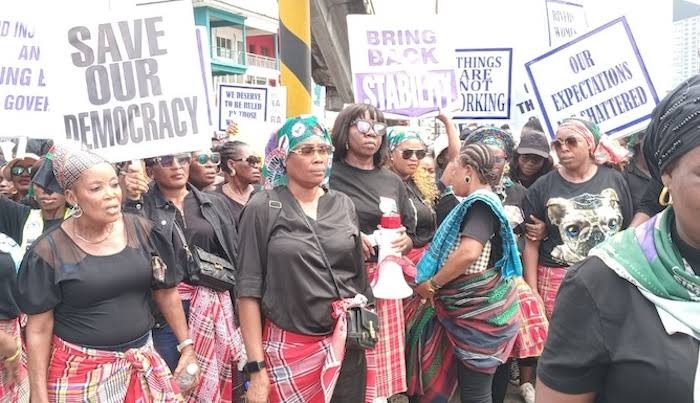
Nigerian women have always been an integral part of the country’s democratic development right from its colonial era, from the Aba Women’s Riot of 1929 that forced colonial administrators to abandon tax and remove warrant chiefs, to the grassroots organising, voter mobilisation, and civic education that sustain the Nigeria we have today. The 1929 riot specifically inspired later protests, including the Tax Protests of 1938 and the Oil Mill Protests of the 1940s, demonstrating that accountability can be enforced outside formal structures.

That history matters because it tested a possibility that still holds today. Hence, what Nigerian democracy lacks is not women’s participation but its recognition. This includes their inclusion in the formal architecture of power—parties, legislatures, and executive councils — which have been built primarily to absorb women’s labour while denying them its rewards.
The question, then, is not “are women included or excluded?” It is that Nigerian democracy has run on a two-tier arrangement: women as the informal engine, and men as the formal beneficiaries. The 2023 election cycle, which produced the lowest female legislative representation since 1999, is the clearest and the most recent proof of the pattern.
The election’s numbers and statistics explicitly reflect that pattern. Despite constituting approximately 115.1 million (49.4 per cent) of Nigeria’s 232.7 million population, according to the World Bank, Nigerian women accounted for only about 10 per cent of the more than 15,000 candidates who contested positions ranging from the presidency to state assemblies in the 2023 election.
ResearchGate data shows that women won only 15 of the 469 seats in the National Assembly. Representation has been going on a downward slide since 2011, and it is predetermined, not coincidental. If women are just 10% of over 15,000 candidates, and 90% of those 10% ran on small-party platforms with few resources, then low representation should not be a surprise.
Winning a Seat is Easier than Keeping One
But scarcity at the point of entry is only half the story; the problem isn’t limited to the entry barrier. According to CDD West Africa, every incumbent female senator lost her re-election bid in 2023, and 7 of 13 female House members were unseated. This suggests that, for women, retaining a seat is harder than winning one. Of the 1,553 women who contested in the 2023 elections, only 72 emerged at the federal and state levels.
A Legislative Pattern of Rejection
This isn’t just an electoral pattern; it’s also a legislative one. Senator Chris Anyanwu made the first formal attempt to increase women’s representation in our democratic system in 2010, but the bill failed to pass second reading. Senator Biodun Olujimi took up the effort after Anyanwu’s tenure ended in 2011, reintroducing a revised bill that was outright rejected on the Senate floor in March 2016; the opposition, most of which was said to have come from Senators representing the country’s northern states, whose populations are predominantly Muslim, was led by Senator Ahmad Rufa’i Sani of Zamfara State.
That rejection was not an isolated setback; it became a pattern. On December 15, 2021, the Nigerian Senate rejected the gender and equal opportunities (GEO) bill for a second time, a bill designed to secure the rights of women and girls in the country. Then, on March 1, 2022, days before International Women’s Day, five constitutional gender bills were rejected in one sitting, including bills for 35% affirmative action in appointed positions, reserved legislative seats, and indigeneship rights for women married outside their state of origin
The rejection, beyond the vague and recycled reasoning that the bills are unnecessary because our constitution already guarantees equality, is a reflection of how deep patriarchal norms direct and influence governance.
What Must Change
Agency and ownership must stop being theoretical, because a democracy that survives on women’s labour but not their governance is not democracy; it’s patriarchy. To solve this problem, we must intentionally create a democratic space where women can thrive. Town halls, legislative hearings, party primaries and other political spaces mean little if women are not present as decision-makers.
Secondly, special measures such as legislated gender quotas and gender-balanced appointments will facilitate women’s presence in government. Around the world, gender quota legislation has been shown to effectively increase women’s participation, and Nigeria must move beyond contemplating such bills.
Lastly, violence hinders women from exercising their rights to participate in political and public life. Governments must pass and enforce laws and policies to prevent violence during elections and beyond, to hold perpetrators accountable, and strengthen access to justice and services for victims. To better address online violence against women in politics, governments should collect data on such harassment and hold media and social media companies accountable.
A democracy can not call itself deliberative while its decision-making process excludes half of the country’s population.