Fave on the Price Women Pay to be Taken Seriously in Afrobeats
|
Getting your Trinity Audio player ready...
|
A woman can walk into the music industry with a voice, a song and an audience and still find herself being assessed for everything except the music. Is her stomach flat enough to fit the unrealistic beauty standards? What is she wearing? Does her skin look different? Is she sexual enough on stage, or no, too sexual? Can she attract attention, can she be managed, is she difficult, who is she sleeping with? What does she have to offer before somebody important decides she is worth investing in?
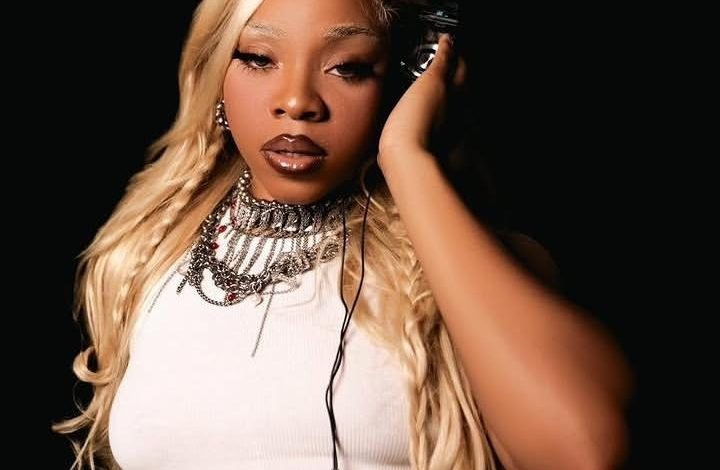
For Fave, these are not just abstract questions; they are part of what it means to work as a woman in Afrobeats. The Nigerian singer spoke about the experience on the Afropolitan Podcast episode posted on YouTube on September 16, 2026, where she described an industry that judges female artists by standards that have little to do with their artistry. The conversation ranged from appearance and sexualisation to unequal expectations around performance, sexual advances from people with industry access and labels’ reluctance to sign women.
“I think first off, I think we’re held to very different standards in the industry. I feel like we’re not measured by our talent or, you know, our stage presence or, you know, just the normal metric that you’re supposed to measure an artist by.”
What comes after that is telling: Fave begins listing the things that can become more important than the music: the body, clothing, skin and the way a woman presents herself.

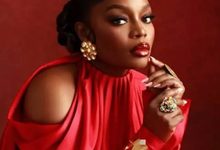
“We’re measured by what we wear,” she said, describing the scrutiny female artists face over whether their stomachs are flat and how their skin looks. She also referred to speculation about her own skin.
It is a familiar trap for women in entertainment. The female body is treated as part of the product, then women are judged for participating in the very system that demands its display. Research published in 2025 on Nigerian Afropop music videos found high levels of female objectification, with women’s physical appearance and sexual appeal repeatedly used as part of the visual and commercial language of the genre. A 2026 study by Omatayo Jemiluyi described Afrobeats as developing within “masculinist traditions and gendered hierarchies,” even as female artists use the genre to challenge those expectations.
Fave’s complaint, however, goes beyond what appears in a music video. She talks about what happens to the woman who is supposed to be the artist.
“It’s never really about the music. It’s more about, you know, people’s sexual desires or their fantasies about you.”
That gaze follows female artists into spaces where their talent should be the currency. Fave questioned why a woman’s clothes can become a prerequisite for whether people take her seriously.
“How decently are you dressed before I get to listen to you?”
Her point becomes clear when you compare it with how male artists are treated. Fave said men aren’t held to the same standard before their music is heard. That imbalance also shows up on stage; Fave said female artists often have to arrive with more spectacle, more energy, more effort, and still contend with scrutiny that has nothing to do with the quality of their performance.
“I really think that when it comes to performances, I think the female artists do way more. They bring their best to the stage, and they leave it all there before they leave,” Fave said.
Then there is the part of the industry women rarely get to discuss without risking their careers: what happens behind the scenes when men control access to opportunity. Fave said female artists can face sexual advances while trying to secure studio access, industry connections or people willing to advocate for their music.
“I don’t want to have to go into how there are sexual advances being made at you to get you into the studio or even to, like, put you out there in front of people to talk, maybe make a case for you in front of, like, the big players in the industry,” the Afrobeat artist revealed.
That is more than an uncomfortable side effect of a male-dominated workplace. When access to studios, labels, promotion and influential industry figures can become entangled with sexual attention, women are forced to navigate a system where professional opportunity and sexual availability can be made to overlap. Fave also recalled hearing a reason that has followed female artists for years: apparently they are supposedly harder to manage.
“They would tell you, you know, it’s hard to manage a female artist,” she said.
The claim sounds like a business calculation, but its consequences are not neutral. If women are considered more difficult, risky, or demanding investments before they’ve had a chance to prove themselves, fewer women get the money, promotion, and institutional backing that limits them. This is particularly significant in an industry that has become one of Africa’s most visible cultural exports, but the global rise of Afrobeats has not erased the gender hierarchy within it. Instead, women are increasingly visible in a system that still treats them as exceptions, and Fave put the disparity plainly.
“What you’re going to do to get a guy to be talked about, you’re going to have to do 10 times for a woman.”
Even success does not necessarily free women from being placed into a box. Fave questioned the habit of searching for a single “Afrobeats Queen,” as though women must compete for one available throne rather than build careers alongside one another.
“What do you guys mean, Afrobeats queen?” she asked. “One woman, in a country of about 200 and something million people. I don’t really think that makes any sense.”
That question reveals something. Male artists can exist in abundance without the industry needing to identify one man as the sole representative of the entire genre. Women, meanwhile, are repeatedly turned into comparisons: who is the next Tiwa Savage, who is better, who is the queen, who is more beautiful, who performs better, who deserves the slot.
Their individuality becomes harder to see once the industry decides women must fit into a category. Fave said this has also affected how she understands her own audience in Nigeria. When people discuss her online, she said, the conversation is often about things surrounding her rather than her music.
“I feel like every time I get on the internet and I, you know, get to see comments or people talk about me, most of the time it’s not really about the music,” she said.
There is a particular cruelty in that. A woman can spend years developing her sound and then discover that the loudest conversation around her is about her body. Yet Fave has also found something different in audiences outside Nigeria. She said she sometimes feels able to perform for people who are simply there to hear the music, rather than expecting something else from a female artist on stage.
The internet and streaming have also helped widen that possibility, because an artist can now find listeners in the United States, United Kingdom or Asia before becoming fully embraced at home, Fave said. Which matters because it gives women another route around the gatekeepers who have historically decided whose music receives investment and attention. But it does not make the gatekeepers disappear.
The problem Fave describes is bigger than one artist, one label or one uncomfortable encounter. Women have been making music in Nigeria for decades, and the industry has produced some of the country’s biggest female stars. What remains is the stubborn expectation that women must be exceptional simply to receive the opportunities routinely afforded to men and must remain attractive, sexually desirable, agreeable and commercially useful while doing it. Fave’s account is not just about how difficult it is to be a woman in Afrobeats; it is also about what the industry has decided a woman must be before it is willing to hear her as an artist.
At the end of the conversation, when asked who she would like to see take the next seat on the podcast, Fave chose 19-year-old singer Qing Madi. She said she would like to hear how the younger artist is navigating the industry. What would Afrobeats look like if women didn’t have to spend so much of their careers proving they belong?