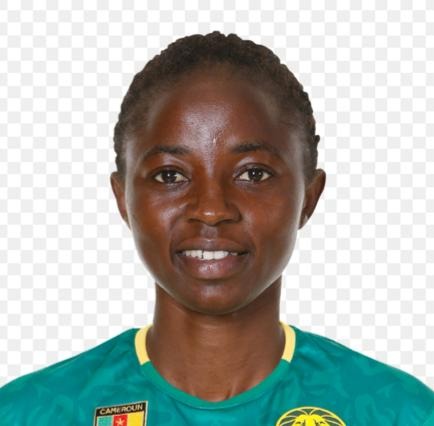
Femicide: Eight Women Killed in a Week, Cameroonian footballer Nchout Ajara Cries Out
|
Getting your Trinity Audio player ready...
|
At least eight women were killed across Cameroon in a single week in late August, the latest and most visible spike in a crisis that has left at least 50 women dead between January and April 2026 alone compared to 77 for all of 2025, according to official figures.
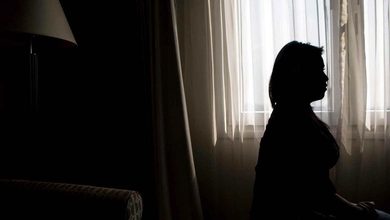
Among the most recent deaths is a 44-year-old woman, who was stabbed to death in a hotel room in the capital, Yaoundé, on Tuesday, August 25. She was allegedly murdered by a 22-year-old man, who was arrested shortly after.
Cameroonian footballer Nchout Njoya Ajara strongly criticised the situation.
“Being a woman in Cameroon should never be a risk,” she said. “In the face of the tragic wave of femicides that has hit our country in recent days, silence is complicity.”

This is femicide, the intentional killing of a woman or girl because of her gender, driven by discrimination, unequal power relations, and harmful social norms. It is the most extreme and brutal manifestation of violence against women and girls, occurring on a continuum of multiple forms of violence.
Most of the cases reported this month are linked to domestic and intimate-partner violence. Human Rights Watch documented several women killed by current or former partners between August 6 and 26, some in the presence of their children.
A separate count by Cameroonian outlet Observer237 recorded 14 violent deaths of women in the same 20-day window, of which nine met the strict definition of femicide; the remaining five, including a case flagged as medical negligence and one attributed to robbery, were excluded or marked for further investigation.
The killings have spread across multiple regions, including Yaoundé, Douala, Belabo, and Tibati, averaging roughly one death a day at the height of the surge.
Cameroon does not currently have a standalone criminal offence for gender-based violence. The Ministry for the Promotion of Women and the Family (MINPROFF) has acknowledged a surge in reported femicides since 2023 and has warned that official figures represent only “the tip of the iceberg.”
Minister Marie-Thérèse Abena Ondoa told parliament in June that a bill creating a standalone offence for gender-based violence is being finalised. A national security meeting convened by the president in August also addressed the rise in killings.
Opposition politicians have accused the state of failing to act. The Cameroon Renaissance Movement (CRM) condemned what it called the “tragic recurrence of domestic femicides” and criticised the government’s passivity.
The broader picture is stark. In 2024, an estimated 50,000 women and girls worldwide were killed by intimate partners or family members, an average of 137 a day. Africa records the highest number of such killings of any region, and the highest rate relative to its female population.
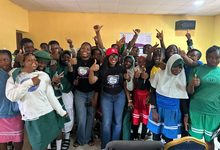
Civil society groups are pushing prevention alongside legal reform. WAA Cameroon runs community-based programmes such as “Boys Count for Gender Equality,” aimed at challenging the masculine norms that underpin the violence.
For now, the pattern still holds: reactive justice after each killing, and a widening gap between the number of deaths and the state’s capacity or will to stop it.