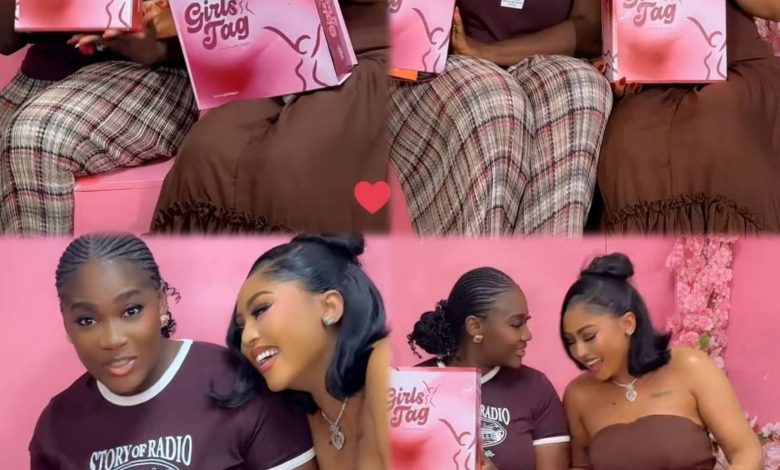
The real issue I have with Mercy Johnson’s package is the fact that it is a menstrual kit. People are currently angry about the price and others are debating the classism around the “target audience” conversations, but honestly, that is not even my main concern.
Classism will most likely always exist and whether we like it or not, target audience is a very real thing in business. What complicates this conversation for me is the kind of product we are talking about. This is not just a luxury perfume, designer bag. it is a menstrual kit, and menstruation already exists inside a very sensitive social conversation around accessibility, dignity and affordability for girls and women.
For years, women and activists have pushed conversations around menstrual health and period poverty. The argument has always been that pads are necessities tied to a biological process women cannot control.
That is why there have been calls for governments to subsidize pads, reduce taxes on them or even make them freely accessible in some spaces because many girls genuinely struggle to afford them consistently.


Now, to be fair, when I first saw the N25,000 price tag, I thought it was just a regular pad package being sold at an outrageous amount, but it’s more. The puberty kit reportedly contains a puberty book written by her, plant-based wipes, menstrual pants, three boxes of different pad variants for both adult women and younger girls, panty liners, disposal bags and a purse to hold the products. When you look at it as a complete package and not just “pads,” the price starts making more sense from a business perspective.
Honestly, some people are absolutely going to buy it. Not necessarily because they need a N25,000 kit, but because they want the experience, the packaging, the branding and the identity attached to it. But even with all this understanding, I still find myself in a bit of a dilemma emotionally. This is because the advocacy side of me still worries about the symbolism of luxury around menstrual products. This is something we are forced to experience by nature, not some luxury thing.
It feels uncomfortable knowing that something tied so closely to conversations around accessibility and period poverty is also entering luxury positioning in this way. Not because luxury products should not exist, but because public conversations are shaped heavily by perception.
If tomorrow, people are advocating for cheaper pads or government support, someone can easily point to premium menstrual products and dismiss the seriousness of period poverty entirely.
So I think my thoughts are sitting between advocacy and business reality. The feminist side of me sees menstrual health as something that should remain deeply accessible and protected from excessive commercialisation, while the business side of me understands that brands have the freedom to create premium experiences for specific audiences.
Menstruation should not just be another market category. It already carries social, economic and emotional weight for many women and girls, and that naturally changes how people react to products built around it.
Editor’s note: This article was first published by the author on Facebook.