6 Newly Published Books by African Authors
|
Getting your Trinity Audio player ready...
|
Summary: As we reach the end of the first half of the year, Naija Feminists Media provides its readers with newly published books by African authors. From Grace by Chika Unigwe to Jollof Rice and Other Revolution, these stories present a poignant storytelling that navigates motherhood, patriarchy, silence, taboos, and others.
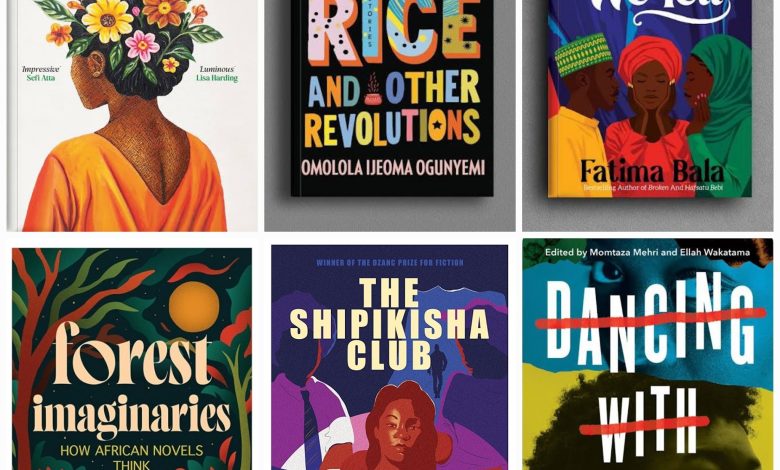
In 2026, many African authors celebrate the year with newly released books. These narratives continue to shape conversations around gender, patriarchy, motherhood, financial independence and women’s autonomy and identity. Below are five newly released books that we carefully curated for you.
- Grace by Chika Unigwe
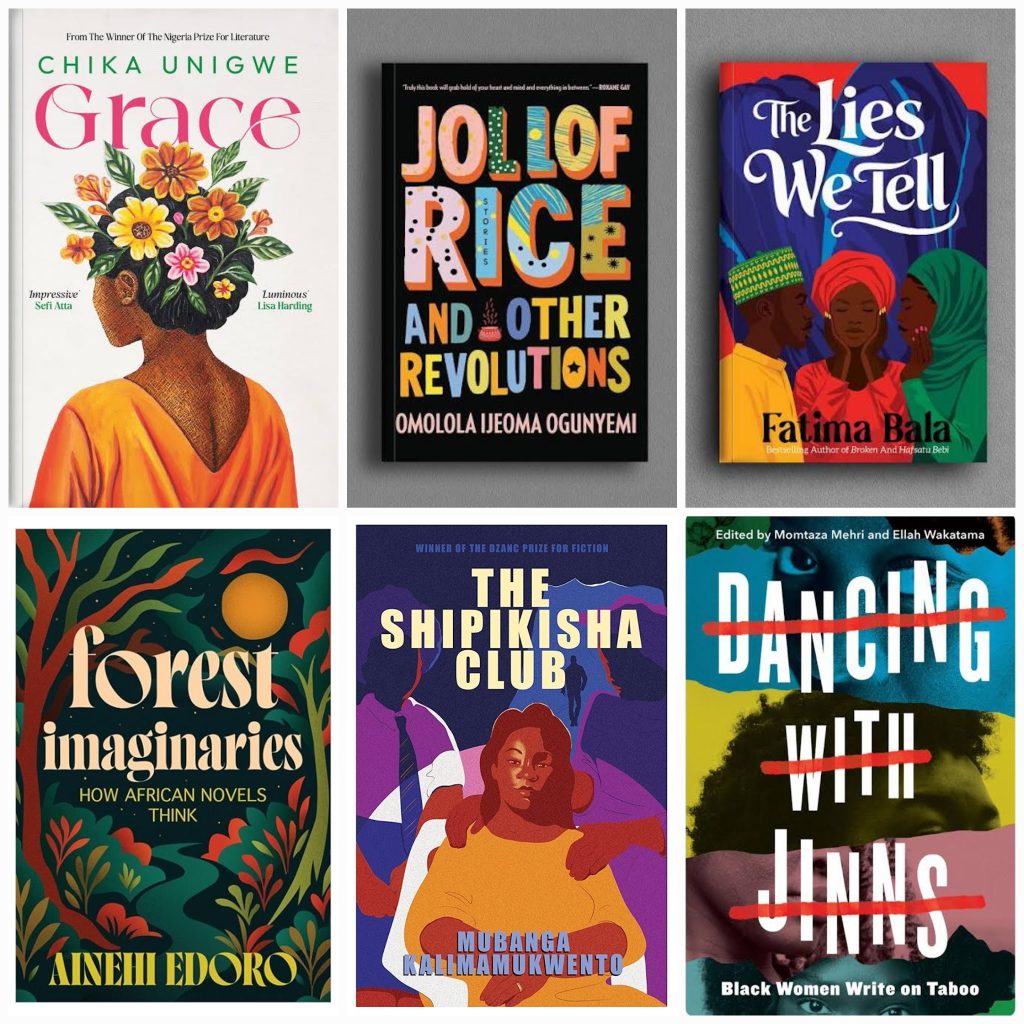
Award-winning Nigerian author, Chika Unigwe, makes a grand 2026 entrance into the literary world with her new title, Grace. The story was published by Canongate and released on January 15, 2026. The narrative follows the life of a midwife, Grace, who looks successful on the outside but carries the burden of a secret from her past.


As a wife and mother to twin daughters, Grace runs a successful clinic where she officially offers service of maternity care, and unofficially helps teenage girls and young women who are pregnant, poor, and have no support, relinquish their babies to wealthier, childless couples. While it makes sense that she is helping a woman become a mother and another relief from unplanned parenting, Grace is deeply haunted by her unresolved grief and guilt for a child she abandoned when she got pregnant at fifteen. In the novel, Chika shows different layers of mothers and demonstrates how society is systematically biased to treat motherhood only as a biological and maternal duty.
The book explores themes like motherhood, maternal obligation, shame and silence, guilt, societal expectations, and forgiveness. Stylistically, the narrative utilises a non-linear structure to alternate between the past (1990s) and the present (2020) to capture the lived experiences of the fictional protagonist in 256 pages.
- Jollof Rice and Other Revolution – Omolola Ijeoma Ogunyemi
In her debut book, Nigerian author Omolola Ijeoma Ogunyemi captured a world of accomplished Nigerian women, spotlighting the challenges and risks they took to control and shape their destinies. The novel is published by and officially released on January 15, 2026.
The book opens in an all-girls boarding school, where Nonso, Remi, Aisha, and Solape forge an unbreakable sisterhood that exists decades after leaving school and adolescence. As the women grapple with the constraints of adulthood and the uncertainties of the world within and outside of Nigeria, Omolola crafts a story of sisterhood, silence, belonging, friendship, and loss. She created a moving, multifaceted portrait of women who must contend with the present and unsettling notion that moving forward in time isn’t necessarily progress.
- Dancing with Jinns: Black Women Write on Taboo – co-edited by Ellah Wakatama and Momtaza Mehri.
Dancing with Jinns: Black Women Write on Taboo is an upcoming collection of nonfiction essays, scheduled to be published by Cassava Republic Press and released on August 27, 2026. The book is co-edited by Ellah Wakatama.
The anthology of essays features candid writing from Black women who openly confront cultural, social, and political taboos across Africa and its diasporas. The book brought together a compelling collection of ten essays that explore subjects whispered in hushed tones, such as AIDS, menstruation, mental health, grief, sexuality, and patriarchy.
The collection navigates themes of identity, grief, loss, and unspoken boundaries imposed by tradition. It questioned the patriarchal rule that dictates what is considered respectable or forbidden for women.
Through its candid prose, the Black woman explores how the concept of taboo dictates and restricts women’s lives across Africa and its global diasporas.
- The Shipikisha Club — Mubanga Kalimamukwento
Award-winning novelist and short story writer, Mubanga Kalimamukwento, tells a heart-wrenching, critically acclaimed courtroom family drama centred on Sali, a mother of three, who is on trial for the murder of her husband Kasunga, found dead after a heated fight in their bedroom. Beyond it being a courtroom drama, The Shipikisha Club is a poignant book that unravels how Sali silently endures Kasunga’s alcoholism, financial troubles, infidelities, and domestic abuse while battling postpartum depression. It explores the oppressive societal and cultural structures placed upon married women in Zambia. Its themes include motherhood, patriarchy, domestic violence, institutional gender bias, and generational trauma.
The novel was officially released on March 10, 2026, published by Dzanc Books, while it is scheduled for official publication on July 21, 2026, by Cassava Republic Press for African and global markets.
- The Lies We Tell — Fatima Bala
Nigerian romance writer Fatima Bala’s upcoming book, The Lies We Tell, is a collection of short stories scheduled to be published by Masobe Books and released on July 23, 2026.
The Lies We Tell by Fatima takes a sharp, intimate look at the hidden realities of Northern Nigerian women. This collection dives directly into the moral dilemmas, silent sacrifices, and secrets that shape familial and societal life. The book explores the internal worlds of Northern women across different generations, how they discarded the normalised silence culture used to survive patriarchal, cultural, and familial expectations. The stories highlight the intense pressure of communal surveillance, memory, and the constant judgment of extended family networks. The book explores core themes like silence, patriarchy, deception, the burden of culture, and love.
- Forest Imaginaries: How Africa Novels Think –Ainehi Edoro
Forest Imaginaries: How African Novels Think is a groundbreaking literary study by Nigerian scholar and founding editor of the African literary platform Brittle Paper, Ainehi Edoro. The book is published by Columbia University Press and officially released on January 20, 2026. It explores how African writers use forests as living, dynamic structures rather than just simple settings. The book also re-evaluates the history of the African novel by shifting the focus away from the urban spaces and European genealogies that heavily shaped early postcolonial literary studies.