Behind the Wheel: Mata Zalla’s Women-Only Tricycle Project Reclaims Mobility in Kano
|
Getting your Trinity Audio player ready...
|
Summary: Mata Zalla Entrepreneurs Cooperative has launched a women-only electric tricycle transport system in Kano to improve the safety of female passengers while creating sustainable livelihoods and challenging gender barriers in Nigeria’s male-dominated informal transport sector.
In a city where mobility has long been shaped by gendered restrictions and safety concerns, Mata Zalla Entrepreneurs Cooperative is rewriting the rules of movement. The Kano-based women’s collective has launched a women-only electric tricycle transport system, creating a space where women can travel safely while also earning livelihoods in an industry historically dominated by men. By putting women behind the wheel, Mata Zalla’s project is disrupting entrenched patterns, reclaiming public space, and reimagining who gets to participate in the city’s economy.
The everyday act of moving from home to work, school, or the market is not always simple for women in Northern Nigeria. Cultural and religious expectations, harassment in public transport, and economic exclusion from transport work all intersect to limit women’s mobility and autonomy.
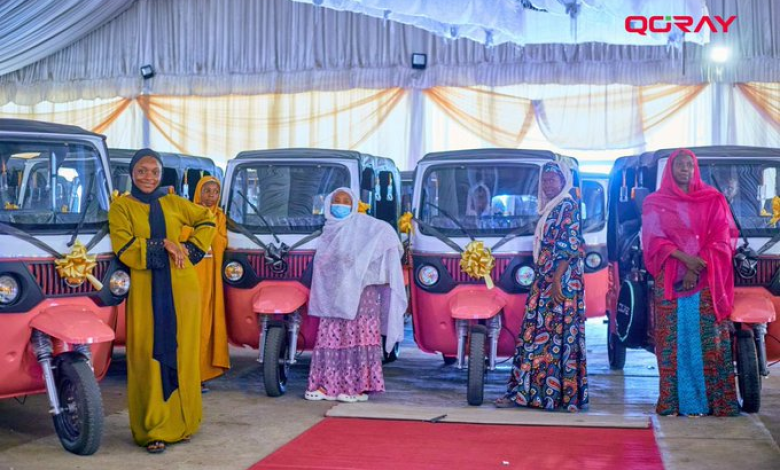
The Pink tricycle sets these women apart from the predominantly yellow colored ones used across the state. Women are trained to operate and service the tricycles, manage routes, and run the service as a cooperative enterprise. Female passengers can board knowing they are travelling with other women, mitigating safety risks and creating a more comfortable public space.

Across Nigeria, the informal transport sector , especially the ubiquitous auto rickshaw, popularly known as keke , is one of the largest sources of urban employment. Yet women are rarely visible in the driver’s seat. Structural barriers such as access to capital, social stigma, and restrictive gender norms often keep them out.
Hauwa Ahmad Tarauni, cofounder of Mata Zalla, told News Central TV that many of the women they work with are widowed or divorced and face financial hardship due to a lack of stable income. The transport initiative, she explained, offers them a viable livelihood while demonstrating that women can successfully operate and manage profitable transport businesses.
Beyond transport, Mata Zalla’s work centres on expanding women’s economic opportunities and mobility. The cooperative trains women in entrepreneurship and transport operations, supports them in driving and managing Auto rickshaws, and provides pathways for widows, divorced women, and other economically vulnerable groups to build sustainable livelihoods.
Some of its programmes also connect women farmers to markets through cargo transport solutions, reducing post-harvest losses and improving incomes. Through these initiatives, the organisation links women’s economic empowerment with safer mobility and climate-conscious transport systems in Kano and other neighbouring states.
But the significance of this initiative goes beyond transport as it intersects the broader women’s struggle across Nigeria, the right of women to move freely, work publicly, and shape urban life on their own terms.
For many riders, stepping into a women-driven keke is not just about getting from point A to B. It is about dignity and safety. It is about seeing women occupy spaces that once seemed inaccessible.
In a region where women’s economic participation is often constrained, Mata Zalla’s model offers a powerful reminder that sometimes, social transformation begins with something as ordinary and revolutionary as who gets to drive.