|
Getting your Trinity Audio player ready...
|
I am writing this afraid. Not of conservatives. Not of religious fundamentalists. Not one of the forces the left has spent decades naming as the enemy. I am afraid of my own movement. The one that gave me language for my liberation. The one I still believe in, or want to. I am writing this anyway because I think that fear is itself the point.
Before I say anything else, I want to say something I mean completely. There are people in this world who wake up every day in profound distress about their own bodies. Not a passing discomfort.
Not a bad mood. A deep, persistent, sometimes unbearable sense that something is fundamentally wrong between who they are inside and what their body tells the world. I want to sit with that for a moment before anything else.
Because that kind of pain, the kind that lives in the body and follows you into sleep, is not abstract to me. I know what it is to carry something the world around you refuses to take seriously. I know what it costs to exist inside a framework that was not built with you in mind, to spend years performing a version of yourself that does not match what you know to be true on the inside.


Gender dysphoria is a documented clinical condition, and the suffering it produces is real. I am not writing this to dismiss that pain or to make it harder for people carrying it to survive. I want better for them than what they are currently being offered. That is part of why I am writing this at all. Everything else follows from there.
The price for curiosity
A friend of mine is a lesbian. She is clear about what that means to her. She is a woman who loves women. Same sex. Not complicated. When she started talking about what she called the erasure of lesbianism inside the very movement built partly to protect her, I listened with the mild curiosity of someone who had not yet pulled the thread. Then I pulled it. And I have not stopped questioning since.
That questioning got me called a transphobe. It got her called worse. And somewhere in the middle of that, I recognised something I had felt before in a very different context. I recognised the feeling of asking a question that the institution does not want you to ask.
I grew up in the mosque. I left Islam because I could not reconcile what the doctrine demanded with what I knew to be true. I asked questions about the concept of nushuz, the legal framework in Quran 4:34 and 4:128 that governs a wife’s obedience and the asymmetric consequences for both spouses.
I questioned the double standards embedded in how those verses have been legislated across Muslim-majority jurisdictions, the architecture built around women’s testimony, and the historical normalisation of sex slavery. I was called controversial. I was told I was causing harm by questioning. I was told my doubt was a weapon that enemies of the faith would use against us. That my questions, however sincere, were dangerous because of what they might arm.
I am hearing the same sentences now. From the left. From people who would identify as my community. The words are different. The structure is identical. I want to be precise here because precision matters. I am not saying the progressive movement is the same as religious fundamentalism. The stakes are materially different.
In some jurisdictions, apostasy means imprisonment or death. Cancellation means loss of platform and income. These are not equivalent consequences. But structures that begin with social punishment have a direction of travel. Several countries have already moved toward criminalising gender critical speech in the name of protection.
When you have lived under a system that punishes thought, you learn to recognise the architecture before the building is finished. The question is not whether we are there yet. The question is whether we are building in that direction and whether anyone inside the movement is still allowed to ask.
I also want to name something that gets lost in this debate. Many trans people have their own experience of religious rejection. Some were thrown out of their homes by religious families. Some were sent to conversion therapy in the name of God. Some lost everything for being who they are inside institutions that used doctrine to justify cruelty.
Trans people are not strangers to the cost of being the person in a framework that needs to disappear. I know that cost from a different direction, and I want that recognition to sit here before anything else is said.
What happened to Chimamanda should frighten all of us
Chimamanda Ngozi Adichie is one of the most celebrated feminist writers alive. She has spent her career articulating what it means to be a woman in a world that has historically punished women for existing on their own terms. When she said that “trans women” are not women in the same way biological women are, because womanhood is inseparable from the specific experience of being born and raised female in a patriarchal world, she was making a carefully grounded argument.
She acknowledged trans people’s humanity completely. She later clarified her position after significant backlash, and her comments were more complicated in their original form than a clean philosophical statement. I am not saying she said everything perfectly.
I am saying the argument she was making deserves to be engaged with, not buried under a pile-on. She was saying that the experience of growing up female, of being seen as female by the world from birth, of carrying the specific history of what that has meant across centuries, is not interchangeable with a chosen or felt identity. That argument has a serious intellectual tradition behind it, and it deserves a serious intellectual response.
The response was not intellectual engagement. Young writers she had mentored publicly denounced her. The pile-on was global and vicious. One of Africa’s most important living feminist voices was dragged across the internet for raising questions that most women, if they are honest, understand from the inside.
What does it mean when a movement that claims to fight for the marginalised turns on one of its most articulate feminist voices for articulating feminism? What does it mean when the punishment for careful disagreement is indistinguishable from the punishment for hatred? And what does it mean that most people who watched that happen stayed quiet, not because they disagreed with Chimamanda, but because they were afraid? That silence is not solidarity. That silence is what I grew up with in the mosque. And I recognise it.
What the trans argument actually says and why it deserves honest engagement
Before I go further, I want to do something this debate rarely does, honestly. I want to take the strongest version of the trans argument seriously rather than the easiest version to dismiss.
The serious argument is not simply that trans people feel like the opposite sex. The serious argument is that gender identity is a distinct psychological reality, separate from both biological sex and gender expression, that exists independently of how a person presents or what roles they perform.
A “trans woman” who presents masculinely, rejects femininity entirely, and still identifies as a woman is making a claim that has nothing to do with stereotypes. She is saying her sense of self as a woman is as innate and persistent as a gay person’s sense of their sexual orientation. Something that could not be prayed away, conditioned away, or therapized away. I take that seriously. And the honest engagement with it is this.
The analogy to sexual orientation is emotionally compelling, but it has an evidential problem. Sexual orientation is robustly documented through consistent, cross-cultural, longitudinal research.
The neuroscientific basis for an innate gender identity located in brain structure has been studied, and the results are inconsistent. Some studies show minor structural differences in some brain regions in some trans people. But brain structure is also shaped by behaviour and environment, which makes causation unclear.
No neurological marker has been identified that constitutes a female brain or a male brain in any definitive sense. The claim that gender identity is hardwired is doing enormous clinical and legal work on a foundation that science has not yet built to the required standard.
This is not dismissal. It is the application of the same evidential standard we apply to every other major clinical and legal claim. If the evidence strengthens, the argument strengthens with it. But we do not build policy on what the evidence might eventually show.
And here is the question I keep sitting with. If gender identity is something entirely internal, entirely separate from biology and presentation and social role, what exactly is it? When someone says I have always known I was a woman, what is the content of that knowing that is distinct from simply being themselves?
Most women, when genuinely pressed, cannot describe a rich internal gender identity separate from their biological reality and lived experience. They do not navigate the world through a gender essence. They navigate it as female people in a social world. The concept may not be describing a universal human experience. It may be describing something specific to dysphoric experience that has been stretched into a theory of human identity for everyone.
The lesbianism question and what it reveals
The movement spent decades insisting that sexual orientation is not a choice, not negotiable, not something to be shamed or redirected. That was the fight. That was the thing we won.
And now, inside the same movement, a lesbian who states that her attraction is to female bodies is called a genital fetishist. The term Cotton Ceiling refers to the barrier some trans activists describe when lesbian partners decline to sleep with trans women. I want to be clear that most trans women are not making this demand on lesbians.
Most “trans women” want to live their lives without imposing on anyone’s sexuality. But the ideology that uses this language exists, it has institutional presence, and it deserves to be named for what it is. It takes a lesbian’s sexual boundary and reframes it as a ceiling to be broken through. The movement that fought conversion therapy is producing its own version of it, delivered not through a pastor but through social guilt and ideological pressure.
I understand the counter-argument. If “trans women are women”, then a lesbian who excludes them is making a political choice dressed as an orientation. But this only holds if the foundational claim is already accepted. You cannot use the conclusion to prove the premise.
And what about “trans women” who have not medically transitioned, who retain male bodies entirely, and still seek inclusion in lesbian spaces and relationships? A lesbian’s same sex attraction is not a social construct she can update with better politics. It is her orientation. Treating her boundary as bigotry is the same logic that told gay men they just had not met the right woman. We called that homophobia then. What do we call it now?
The clinical question nobody wants to ask
I have lived with suicidal ideation since I was young. No therapist who treated me with genuine care told me my feeling that death would resolve my pain was an identity truth they needed to affirm and facilitate.
They took my suffering seriously and treated it, not its proposed conclusion. They built with me what I could not build alone. That is not cruelty. That is what clinical care actually looks like. Why is that standard not applied consistently to gender dysphoria?
The clinical principle applied to every comparable condition is the same. Body dysmorphia is not treated by surgically altering the perceived defect. Anorexia is not treated by facilitating weight loss to match the patient’s body perception.
Body Integrity Identity Disorder, where people feel profound distress because a limb does not feel like it belongs to them, is not treated by amputation even when the conviction is sincere, persistent, and lifelong. In every comparable case, the principle is to treat the distress, not facilitate the feeling’s conclusion.
Gender dysphoria is the only diagnostic category where the dominant institutional model inverted this principle. And when clinicians began asking why, they were not met with evidence. They were met with accusations.
The Cass Review, a systematic clinical review commissioned by NHS England, found that the evidence base for paediatric medical transition was remarkably weak. It has shifted policy in the United Kingdom and contributed to similar shifts in Sweden, Finland, and Denmark.
It is contested by some clinicians who dispute its methodology, and I am not asking you to treat it as the final word. I am asking you to treat it as what it is. The normal evidentiary process of medicine is catching up with a framework that ran ahead of the science. That process deserves to happen without the people conducting it being professionally destroyed for doing so.
The trans community’s fear about clinical scrutiny is real, and I want to name it honestly. They have watched bad faith actors use medical and scientific language as cover for straightforward cruelty. That history is real. But the response has been to treat all clinical scrutiny as bad faith, and that puts ideology in the place where evidence should be. That is not protection. That is doctrine.
The space question and what is actually at stake
Women’s spaces, lesbian spaces, and black spaces were not created to exclude. They were created to protect. To give a group whose vulnerability is tied to a specific shared reality the ability to exist on their own terms without having their identity defined by outsiders. That logic is sound and worth defending.
The problem is not that trans people want safety. Of course they do. Trans women in male facilities face documented, serious violence and assault. That reality is real, and it matters. The reason this conflict exists at all is that two vulnerable groups have genuine competing safety needs, and nobody in power has been willing to sit with that full complexity honestly.
Instead, one group’s needs have been used to override the other’s, and the group with less institutional power at any given moment bears the cost. The solution the movement has offered is to replace biological sex with self-identification as the organising principle of protected spaces. But several documented cases in the United Kingdom and the United States involved male-bodied people who identified as women being placed in women’s prisons and subsequently assaulting female inmates.
These are not hypothetical harms. The women who raised concerns were told their fears were transphobic. In sports, the question is physiological. Male puberty produces skeletal structure, lung capacity, and cardiovascular advantages that do not fully reverse with hormone treatment. This is not contested biology. It is documented in the same clinical literature that trans advocates otherwise ask us to defer to.
In shelters and healthcare settings, the question is about the specific vulnerability of women, many of them survivors of trauma, in spaces where they are undressed or in crisis. The question is not whether trans women are dangerous. Most are not. The question is whether biological sex can be replaced entirely by self-identification as the organising principle without creating problems that harm real people.
Trans people deserve safety too. Completely and without qualification. The solution is not to dismiss either group’s concerns. It is to build with genuine care, spaces that protect everyone. The same logic that created women’s spaces can create trans spaces. Not as segregation but as protection. Not as exclusion but as the recognition that different vulnerabilities sometimes need different shelters. Lesbian spaces were not created to harm straight women. Black spaces were not created to harm white people. Third spaces built on that same logic for trans people are not a consolation prize. They are the same principle applied consistently and honestly.
What the feminist argument exposes
Feminism spent decades arguing that gender roles, femininity, masculinity, the whole architecture of how women and men are supposed to present and behave, are social constructs imposed on biological bodies to enforce hierarchy. That was not a fringe argument. It was the intellectual core of the feminist project.
Here is the tension I cannot resolve. When the framework for trans identity maps womanhood onto an internal sense of femininity, an identification with feminine things, a feeling of wrongness in masculine spaces, it is encoding the very stereotypes feminism identified as constructed and harmful. It is saying femininity is not a social enforcement but an essence. That is a deeply conservative argument wearing progressive clothing.
I hold this carefully because not all trans people make this argument. Some trans women present masculinely, reject femininity entirely, and insist their identity has nothing to do with gender stereotypes.
That version of trans identity is philosophically more consistent. But it makes the foundational question harder, not easier. If your womanhood has nothing to do with femininity or presentation or social role, and the neuroscience for innate gender identity is not yet established, what exactly is the content of the claim? What does it mean to feel like a woman when we have spent decades arguing that there is no single way a woman feels?
I am not asking to be dismissive. I am asking because the answer has consequences for law, for medicine, for how we organise society. And the movement’s response to that question has been to call the asking itself an act of violence. That is not an answer. That is a closing of the door.
What I actually believe
I will be honest. I do not fully know where I stand on every dimension of this question. I am still working it out. What I know is that I want to be able to ask without being told that the asking is hatred. That is what this article is. Not a verdict. An insistence on the right to keep questioning.
What I do know is this. Trans people deserve protection from violence, full stop. They deserve dignity in daily life, in employment, in healthcare, in the street. They deserve medical care that takes their suffering seriously and invests in understanding what actually helps rather than what ideology prescribes. And they deserve spaces of their own built on the same logic as every other protected space, for protection and community, not as a consolation prize but as a genuine right.
What I cannot accept is one group’s pain being resolved by erasing another group’s reality. A “trans woman” who has lived quietly for decades, who asks nothing of anyone, who simply wants to survive, deserves exactly the dignity and protection any human being deserves.
But that dignity does not require womanhood to be redefined around her experience. You can be fully human without wearing another group’s historical identity as the costume of your arrival. There is a difference between appreciation and appropriation, and that difference matters in identity as much as it matters in culture.
One trans person who has modelled what honest engagement with these tensions looks like is Buck Angel, a “trans man” who has been living his transition for over thirty years. Buck has consistently advocated for biological reality alongside his identity, argued publicly against puberty blockers for children, and engaged with women’s fears as legitimate rather than dismissing them as bigotry. Buck is not popular in some trans activist spaces for saying these things.
Buck holds views I do not agree with on everything. But Buck’s willingness to hold complexity without demanding that everyone else resolve it in Buck’s favour is exactly the kind of engagement this conversation needs. The fact that honesty about biological reality costs a trans person their standing in their own community tells us something important about what that community has become.
What the movement gave me and what it is becoming
This movement gave me something I did not have before. It gave me permission to be a woman who does not perform femininity, who does not find her womanhood in heels or makeup or softness, who can exist exactly as she is without apology. It told me that the enforcement of gender roles onto women’s bodies and personalities is itself a form of harm. I believed that. I still believe it.
It gave me the freedom to leave religion without being destroyed for it. To accept my sexuality without shame. To speak dissenting views without the fear of consequences that would have followed in the world I came from.
And now I am watching the same movement use the same mechanisms religion used to silence people asking the questions I once asked inside a mosque. Not with the same consequences. But with the same structure, the same certainty, the same conviction that the questioner is the problem rather than the question.
Justice, truth and freedom are my values. I found the left embodying them once. I want to find that again. But I cannot find it by pretending not to see what I see. I feel like an outcast for saying this. I am saying it anyway because the thing the movement taught me, the thing I actually believe, is that the true thing must be said even when it costs something.
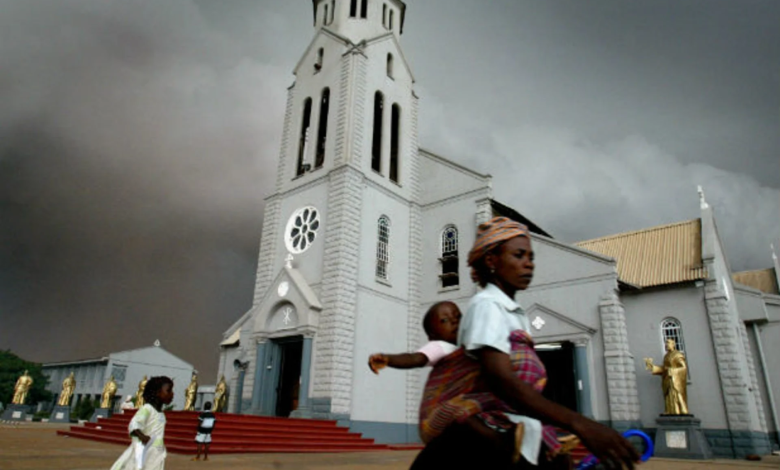
The mosque (church) I grew up in believed it was protecting the faithful when it punished questions. It was not protecting them. It was protecting itself. I am still inside this house. I am raising the alarm because I still love it. Because the thing that makes a movement worth belonging to is not its certainty. It is its willingness to be wrong.
Are we still willing to be wrong? Or have we decided that our pain is so valid, our cause so righteous, our enemies so clearly identified, that the question itself has become the enemy? I do not know the answer yet. But I think the fact that I am afraid to ask it tells us everything we need to know about where we are standing.