Dismantling the Myth of the African Perfect Wife ‘In Our Own Ways’
|
Getting your Trinity Audio player ready...
|
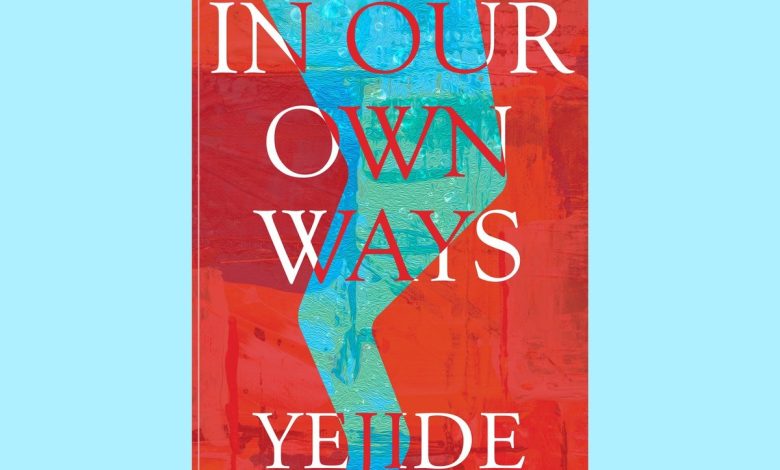
Summary: In Our Own Ways, Yejide Kilanko narrates the story of Fadaka Mausi, a woman who narrowly missed a shattered reality caused by her husband’s abduction of their daughter and his disappearance. While the society expected her to maintain the silent culture and obediently pray for her husband’s return, she fights for her agency and her daughter.
One of the hypocrisies of a patriarchal society is the expectation that a woman must be perfect as a wife and mother. So, if a marital union fails, she takes the blame, when childlessness occurs, she is at fault, and worse, if her husband dies early, she is seen as a murderer and a witch. In Yejide Kilanko’s third novel, we see the crumbling of the mantra of the perfect woman. The author demonstrates how African patriarchal culture puts men on a pedestal of gold
In the third novel from Yejide Kilanko, we are introduced to Senami and Fadaka Mausi, a childless couple trying to conceive. As is the norm among Africans, the blame is on the woman. As the novel progresses, the couple has a daughter, and it’s then that Senami’s true colours surface. He disappeared with their daughter, leaving Fadaka shattered. As accustomed to African culture, Fadaka is forced to shoulder a blame that is not hers – people judged her for Senami’s disappearance. Yejide critiques this societal norm, directly opposing how a woman’s security is often tied to a man’s whims in a patriarchal system. This ultimately led to women being responsible for domestic stability while excusing male misconduct.
While dealing with the trauma of a runaway husband and an abducted daughter, culture demands that she remain his wife while praying for his peaceful return. They told her to maintain the cultural silence as expected of an African woman because a broken marriage is a woman’s failure. She refused this, transforming from a victim who hides her trauma into a woman who speaks her truth, thereby stripping her narcissistic husband of his power.


Fadaka’s saving grace lies in her female friendships. With the help of her best friend Eyimofe and a host of other women whom she meets as the story progresses, she regains her balance and purpose. The women’s quiet but impactful acts of love demonstrate the truth behind women supporting women.
In In Our Own Ways, the author illustrates how patriarchy is not just a single man’s power; it is a massive tool that manifests through different characters and social structures. Senami, Fadaka’s husband’s disappearance with their daughter is the ultimate patriarchal act, one that treats a child as property to be stolen and a wife as a subordinate who can be discarded. Senami uses his position as head of the family to create a shattered reality for Fadaka. He proved that in a patriarchal marriage, the woman’s stability is entirely dependent on the man’s whims.
Another subtle form of patriarchy in the book is the commodification of the perfect wife. Fadaka’s value is initially tied to her ability to be a good wife and mother. But when Senami disappeared, these roles were stripped from her. She had to fight to prove she had an identity outside of these patriarchal definitions. Interestingly, Yejide shows that older women can sometimes be the most rigid enforcers of patriarchal rules. Fadaka’s mother-in-law, Aunty Kike is a clear example of this. When Senami struggles with childlessness, she suggests and facilitates a deceitful scheme to have a prophet impregnate Fadaka without her knowledge. She is also one of the forerunners who blamed her daughter-in-law for the broken marriage.
By emphasising how Fadaka navigates the expectations of the older generation, the book shows how patriarchy is passed down through tradition, and the matriarch gatekeeper, making it even harder for younger women to break free without feeling like they are betraying their heritage.
In the end, Fadaka did not wait or pray for Senami to come back. She shifted her focus to be a whole person. She rejected the shattered reality just to satisfy the communal desire for a patriarchal society. By fighting to get her daughter back on her own terms, Fadaka dismantles the idea that a father (or his family) has an absolute right to claim a child while discarding the mother.
She asserts that her motherhood is not a service provided to a man’s lineage, but a fundamental relationship of her own. Yejide advocates that when a woman stops trying to be the perfect wife in a patriarchal society, she will finally be the architect of her own liberation. The novel is a stirring reminder that while sisterhood may be our saving grace, women’s voice is their greatest weapon.