‘Treated as Third-Class Citizens’: The Hidden Struggles of Single Mothers with Disabilities
|
Getting your Trinity Audio player ready...
|
Visual artist and single mother of three, Olubunmi Oyesanya, was coming back from her teaching job on the night of Feb. 3, 2015, when a franchise of Lagos Bus Rapid Transit (BRT) rammed into her at the Benson bus-stop in Ikorodu, a suburban area in Lagos State. It was about 9 pm, and the bus not only hit her, making her land flat on the ground, but it also crushed both of her legs, effectively making her physically disabled.
Olubunmi often wonders if her disability and eventual single motherhood could have been avoided if bystanders had been proactive in administering first aid treatment to her and taking her to the hospital. She told Naija Feminists Media (NFM) in a sit-down interview,
“I bought foodstuffs that I was intending to cook at home that night. The people I bought food from were still on the road when the accident happened, and they still did not attend to me,” Olubunmi said, her face sunk in disappointment.
She recalled that at the accident site, rather than people offering aid, they formed a circle around her. Some took photos and videos, while others prayed that such a tragedy never happen to them, crossing two fingers over their heads in a repeated circular motion, a Nigerian way of rebuking negativity.

As people treated the tragedy as a form of amusement, Olubunmi bled all over. She suffered excruciating pain for what felt like forever and pleaded under her breath to be taken to the clinic. About forty-five minutes later, a fish seller ordered two men to carry her to the hospital. The men lifted her, each holding one leg. About three blocks from the accident site, they found a clinic, and Olubunmi was admitted.
The hospital informed her that they would have to amputate both of her legs. Her family resisted amputation, so over six reconstructive surgeries were done to repackage the legs. Although reconstructed, Olubunmi’s legs are visibly swollen, and she would never be able to stand for long again or walk properly again.
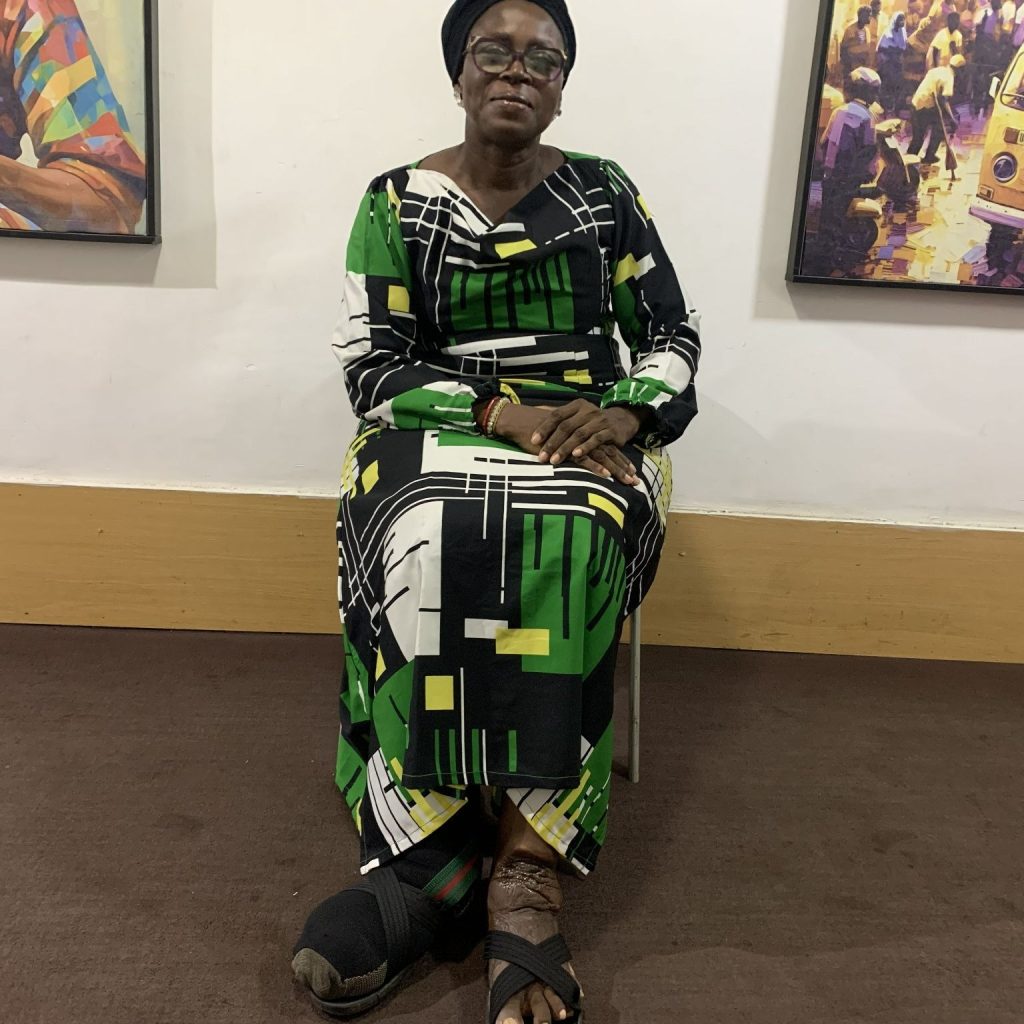
The National Orthopaedic Hospital, Igbobi in Lagos, where Olubunmi is treated, discharged her to go home, while she comes to the hospital twice a week for check-in. But to Olubunmi, home was not a place for healing. She described residing at home as living another kind of death. She lamented that her husband was not able to adequately care for her and their children.
“There won’t be food. I’m the one who will provide the money and get people to bring the food. To cook it, he will serve the food undone for both the children and me,” Olubunmi lamented, sharing the distress she suffered. “Later, he started leaving home for an extended period of time, sometimes four months, other times six months.”
Eventually, Olubunmi’s spouse abandoned her and the children. In 2021, he relocated to another city, Akure, about 283 kilometres from their marital home.
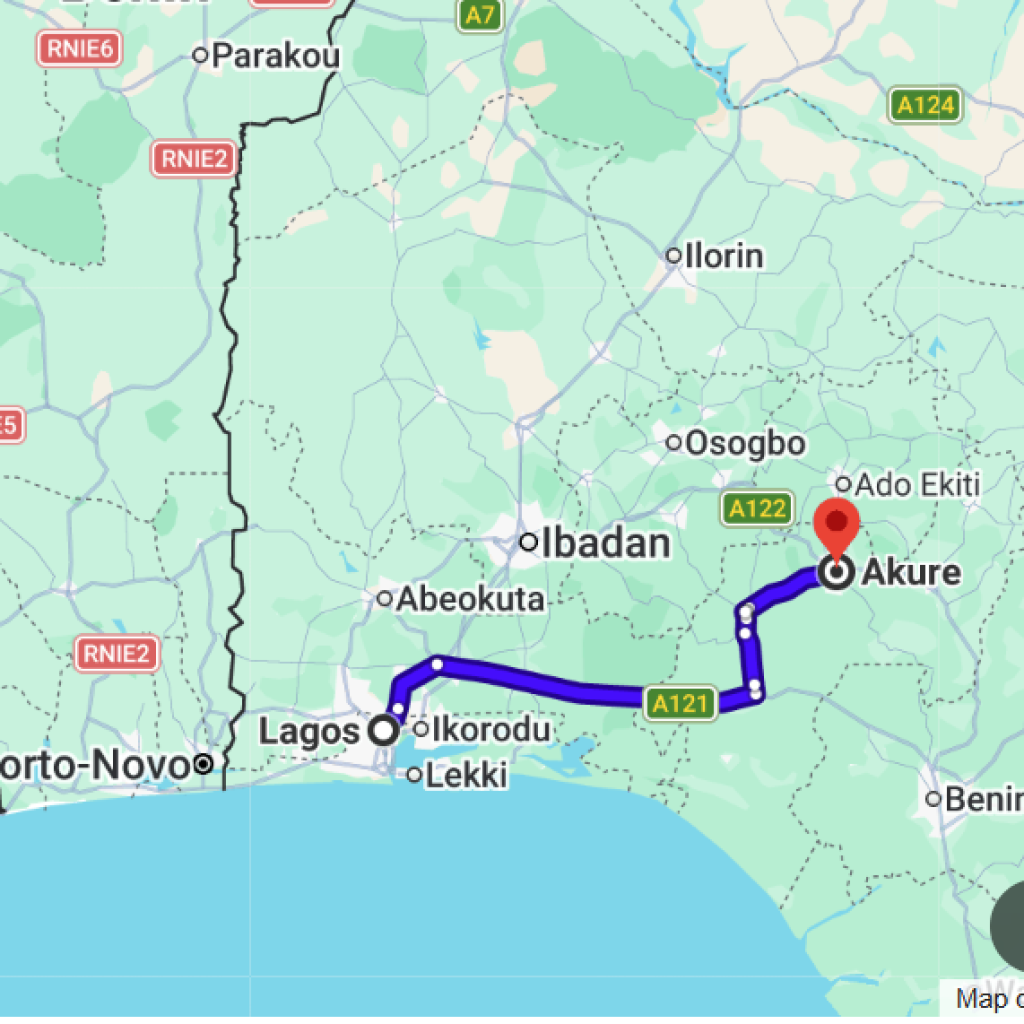
“It’s been four years, and he never came back,” the now single mother said, shaking her head while appearing to be shocked by the actions of her husband, who was her best friend.
‘No one wants to be associated with you’
A recent study revealed that single motherhood is a global pattern, with 8% of all households worldwide being led by a single parent. Of these single-parent households, 84% of them are headed by mothers, who had either been abandoned by their spouse, widowed or affected by cultural practices, leading to about 101.3 million single mothers.
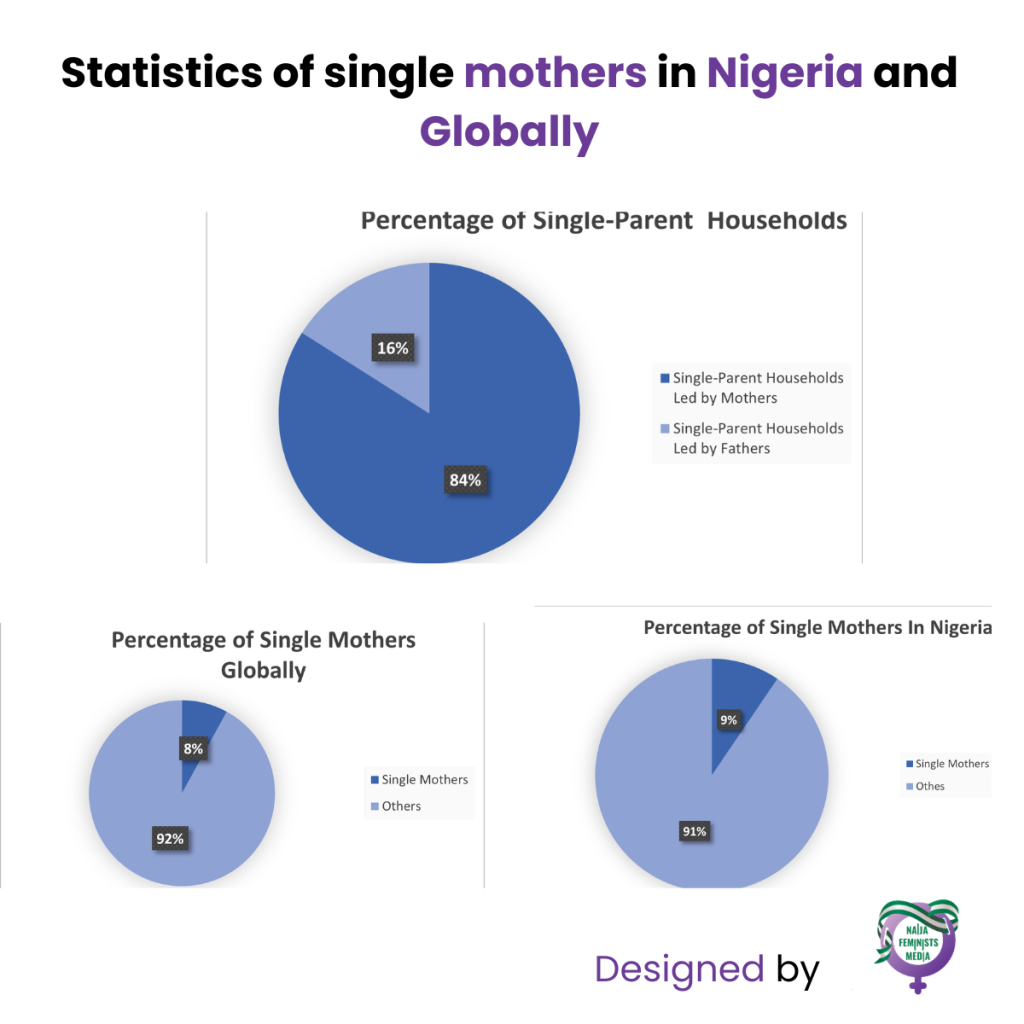
Sub-Saharan Africa accounts for the second-highest prevalence of single motherhood. Millions of Nigerian women, who are about 9.5% of the population, are single mothers. The prevalence ranged from 2.9% in the North-West to 20.3% in the South-South region.
Olubunmi told NFM that being a single mother has not been easy due to the burden of being solely responsible for their financial well-being. She decried that, coupled with her disability, she suffers from isolation.
“I continue to face stigmatisation. Those who used to be my very good friends in the Art community have left,” Olubunmi said. “Once you have a default, they won’t want to be associated with you.”
Another mother with disability, Assumpta Khalil, could relate to Olubunmi’s experiences. She, too, had been in an automobile accident, and the incident led to her having a physical disability, becoming a single mother, and suffering abandonment. She shared details of her experiences with Naija Feminists Media.
While on her way to her tertiary institution, Polytechnic Ibadan, to take her final exams, the bus Assumpta entered had an accident on the Lagos-Abeokuta road, around the Ifo axis. It was on November 13, 2002, and of the 18 passengers in the vehicle, ten of them had died, leaving her and seven others the surviving passengers. Assumpta noted that it was a day she would never forget. Many of the surviving passengers had suffered severe injuries, such as spinal cord injuries. In her case, she lost her right arm.
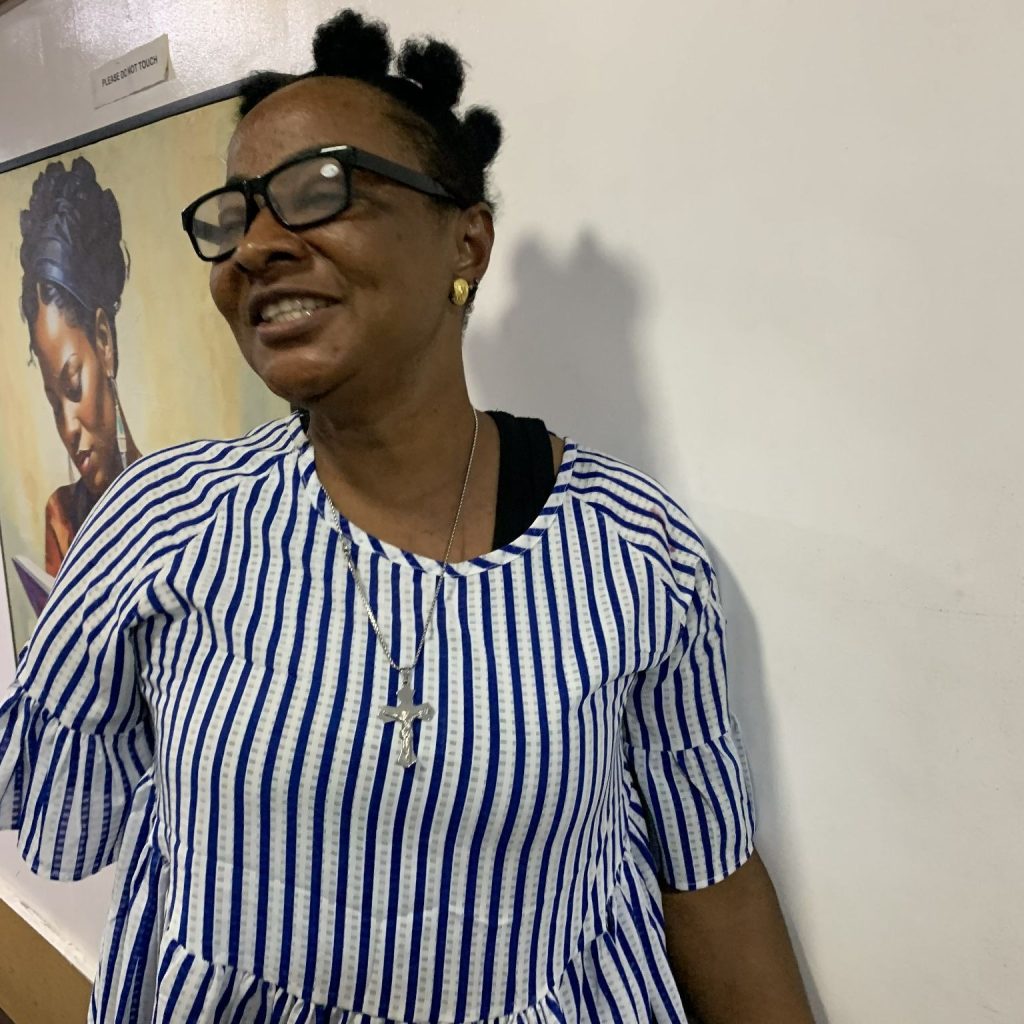
Assumpta, however, believed she was lucky because she survived an accident in which many people had died. Three years later, Assumpta got married. But it didn’t last very long. Within two years, she was divorced and became a single mother of two.
Recalling the reason for the breakdown of her marriage, Assumpta attributed it to society not being accepting of people living with disabilities (PwDs). She lamented that her former in-laws were not accepting of her, and her husband maltreated her within the first year of their marriage, shortly after their first child.
“I was called not a complete woman, less of a woman, and words that were derogatory to the detriment of my mental health,” Assumpta said, embittered with teary eyes. “He also beats me, and then he started cheating. It was a lot.”
Assumpta contemplated reporting her husband to the police for domestic violence, but her mother discouraged her, saying it would not be right for people to learn that she had arrested the father of her kids.
Although she did not report her husband to the police, Assumpta resolved to leave the marriage while pregnant with her second child. She described the day she left as the day she “felt free,” expressing that the marriage had imprisoned her and she felt she was going to die.
However, leaving the marriage against her family’s advice, who believed she was lucky to have found a husband in the first place, came with social ostracism. Her mother didn’t speak to her for two years, and she ended up caring for her children alone without familial support. Assumpta was not working while married, so as a single mom, she struggled to provide financially.
“Even without disability, it is stressful to raise a child. When you now have disability, it is more stressful and demanding.” Assumpta said, describing what it felt like being a single mother with disability. “When they are young, it is not easy. When they are growing up, it is not easy because they are thinking about how to pay university fees. It is a lot, mentally.”
Beyond mental exhaustion, Assumpta also suffers from stigmatisation, saying people treat her as less. She explains to Naija Feminists Media,
“Being a woman in Nigeria, we are like second-class citizens, and now having a woman with a disability. We are like lesser, we are like third-class citizens,” Assumpta said.
Supporting Single Mothers with Disability
Favor Amaka Chukwuma, Clinical psychologist at The Lagos State University Teaching Hospital, recommends that women with disabilities should never let their disabilities weigh them down. Instead, they need to continue to show up for themselves and see their condition as “unique abilities.”
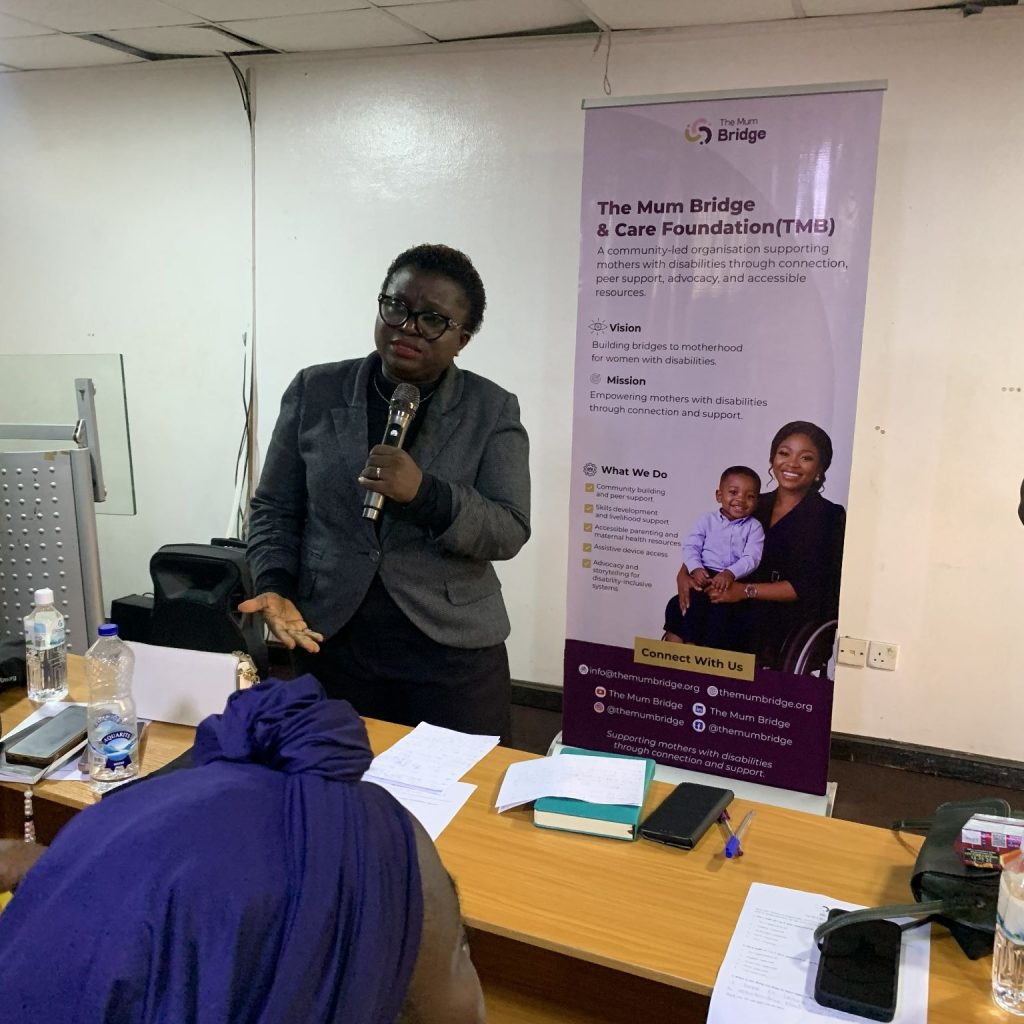
Founder of The Mum Bridge, Solace Olabode, who is also a mother with disability, told NFM that the non-governmental organisation is working to address the issues that mothers with disabilities face.
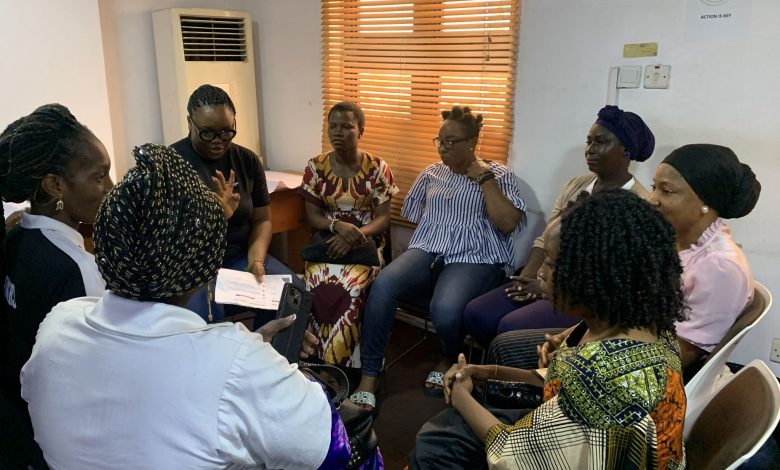
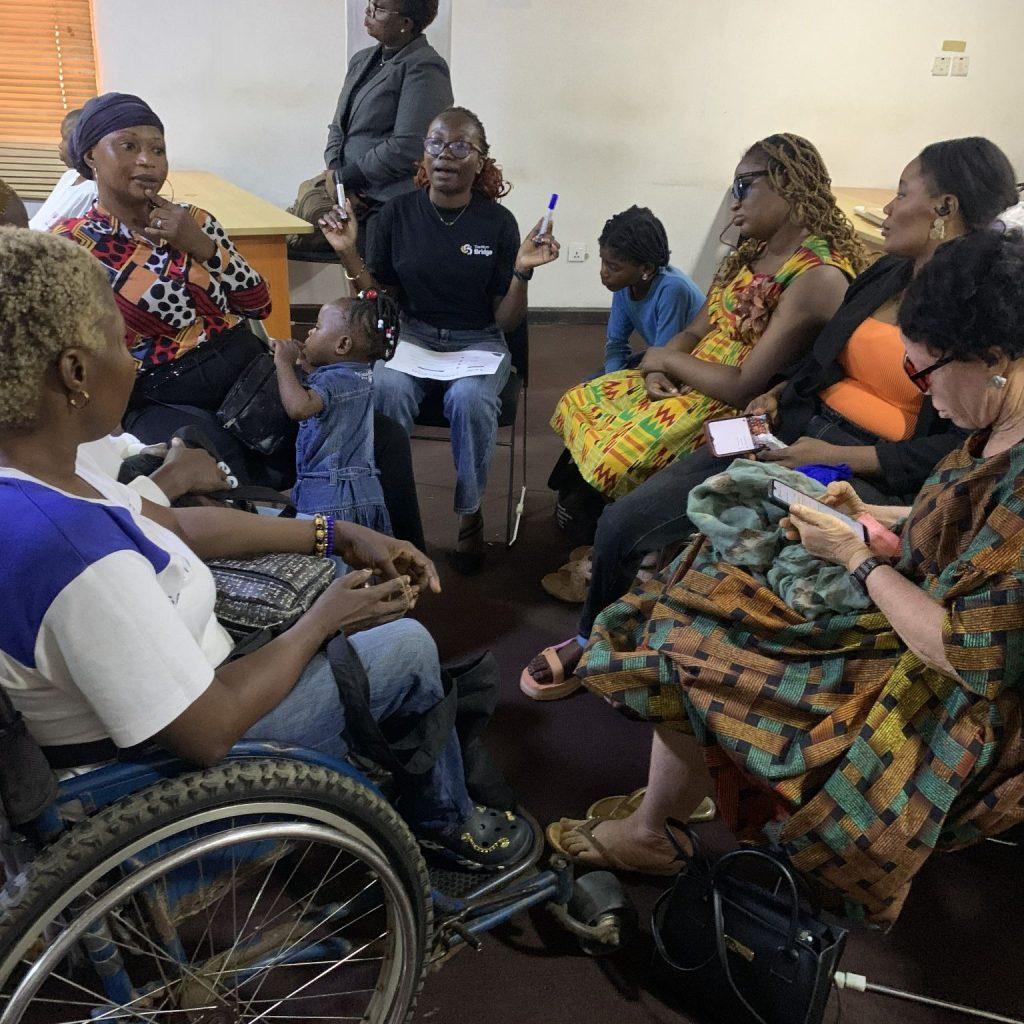
On May 14, 2026, The Mum Bridge hosts a listening circle event, where mothers with disabilities, including single moms, connect, share experiences, and express hope for the future.
However, beyond communal support, Assumpta shared that Nigeria’s Disability Act 2018 needs to be amended to provide provisions for single mothers with disabilities to make their burdens lighter. The Disability Act, signed into law on January 17, 2019, prohibits all forms of discrimination against Nigerians with disabilities. It states that it is illegal for any person to discriminate against, threaten, or harass PWDs. It stipulates N1,000,000 fines for corporate bodies that violate the law and N100,000 or six months imprisonment for individuals who default. The Act also stipulates that every PwD is entitled to free education up to the secondary level, among other provisions.
Assumpta noted that beyond the provisions made, PwDs have varying needs, and specific accommodation must be made depending on their situation. She recommended that educational support should be extended to their offspring, particularly single mothers.
“They can help us train our children to go to school, from primary school to university,” Assumpta said. “They can also check international policies and adopt best practices for single moms.”
Currently, Olubunmi and Assumpta survive by depending on their crafts. Olubunmi continues to sell artworks while Assumpta sell groundnuts. People are impressed that Assumpta could make groundnuts with only her left hand; hence, they patronise her often. However, both women hope for a day when mothers with disabilities don’t face abandonment because of their condition.
“I don’t know why people can’t understand that, I am just like them,” Assumpta said.