DOHS Cares, Rep’s Gender Unit Seek Femicide Provisions in VAPP Act Review
|
Getting your Trinity Audio player ready...
|
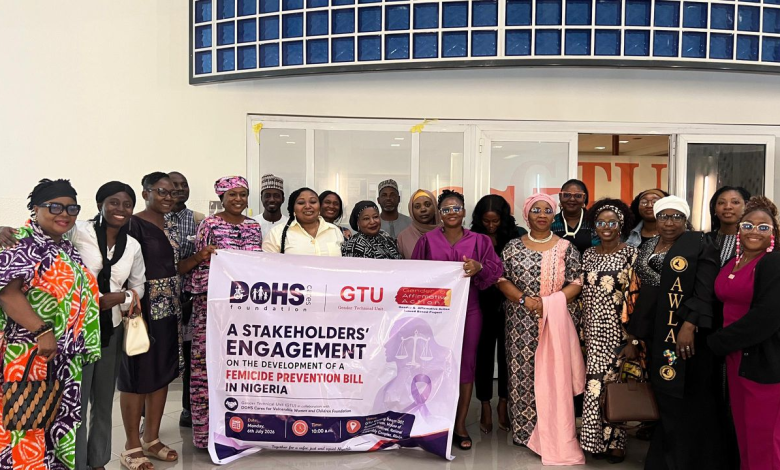
DOHS Cares Foundation, in collaboration with the Gender Technical Unit of the House of Representatives, convened a stakeholders’ engagement in Abuja on July 6, 2026, to advance the inclusion of femicide provisions in the ongoing review of the Violence Against Persons (Prohibition) Act.
An effort to strengthen Nigeria’s response to gender related killings gained momentum.
The engagement, held at the Gender Technical Unit office within the National Assembly Complex, brought together representatives of women’s rights organisations, civil society groups and government institutions to examine findings from DOHS Cares Foundation’s 2025 Femicide in Nigeria report and discuss legislative responses to the killings of women and girls because of their gender.
According to the DOHS Cares Foundation, its data shows that femicide occurs in Nigeria every 49 hours. The meeting focused on what a stronger legal response could look like, including prevention, accountability, survivor protection and support for families affected by femicide.
Representatives of TechHerNG, Girls Education Access, JUWACI, Yargote Foundation, Dorothy Njemanze Foundation, Heinrich Böll Foundation, Rosa Luxemburg Foundation, Westminster Foundation for Democracy, the African Women Lawyers Association, Fame Foundation, CEE-Hope Shelter, Tabitha Empowerment Foundation and Regy & Henry Amazing Grace Foundation attended the engagement. The Federal Ministry of Women Affairs was represented by Princess Dr Jumai Idonije. Speaking at the meeting, Dorothy Njemanze, who represented Heinrich Böll Foundation, called for stronger measures against the concealment of domestic violence within families. She also stressed the need for sustained community awareness and earlier intervention before violence escalates.


A representative of Yargote Foundation called for men to be engaged as allies in preventing gender based violence, while addressing toxic masculinity early. Ajuma Drisu of TechHerNG also drew attention to technology-facilitated gender-based violence, noting that it must be addressed within efforts to prevent femicide.
Representing the Minister of Women Affairs, Princess Dr Jumai Idonije, said the Ministry of Women Affairs’ gender-based violence dashboard reflects similar patterns to those documented in the DOHS report. She advised that relevant provisions in the proposed femicide bill should be considered during the VAPP Act review, alongside consultation with the Federal Ministry of Justice.
The meeting also addressed the gap between laws and the support available to women experiencing violence. Betty Abah, Executive Director of CEE Hope Shelter, called for concrete survivor support systems, noting that Nigeria has only 22 functional shelters for survivors, compared with about 300 in Canada, despite Nigeria’s much larger population.
The conversation was not only about legislation. Monica Agbane, a family member of Deborah Okwori, spoke about Okwori’s killing by her ex-boyfriend, Lintex Ogale, and appealed for legal measures that can prevent other women from being killed in similar circumstances.
Ololade Ajayi, founder of DOHS Cares Foundation, announced plans to establish a safe haven for families of femicide victims and survivors, with support focused on trauma recovery and healing.
At the end of the engagement, clerks of the House of Representatives committed to briefing members of the House and providing feedback. DOHS Cares Foundation and the Gender Technical Unit said they would circulate a concept note and form a technical working group, including the Federal Ministry of Justice, to support the integration of femicide provisions into the VAPP Act review.