|
Getting your Trinity Audio player ready...
|
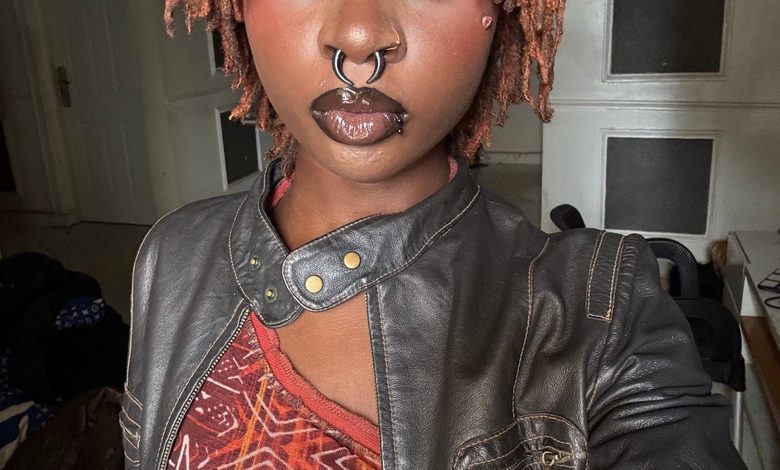
Debra Chiemela Ukauwa is a Nigerian software engineering student, feminist and atheist whose journey has been from a deeply religious upbringing to questioning and eventually leaving Christianity. Through writing and social media, Debra explores questions of belief, morality, feminism, atheism, and identity, emphasising critical thinking and the freedom to question ideas.
In this thought-provoking conversation with Naija Feminists Media, Debra talks about growing up religious in Nigeria, deconstructing her faith, and the strong reactions of Nigerians who found out she stopped practising Christianity.
Debrah Ukauwa on Becoming Religious and Unbecoming
- Tell us a bit about yourself. What was growing up religious in Nigeria like for you, and what kind of person were you before you began questioning your beliefs?
I’m a Nigerian software engineering student, and I’m also a feminist and an atheist. Growing up religious in Nigeria meant Christianity wasn’t just something you believed in; it was deeply woven into everyday life, family, school, morality, and how people understood what a “good” person should be. I grew up accepting a lot of those ideas because they were simply what I knew. Before I started questioning my beliefs, I was very much the kind of person who accepted what I was taught because I trusted the people teaching me. I didn’t really think of myself as someone who would one day question religion so deeply. Becoming more curious about morality, women’s rights, sexuality, and how religion is used in society made me start seeing things differently.


- Was there a particular moment that made you seriously reconsider your beliefs, or was deconstructing religion more of a slow process?
For me, it was much more of a slow process. There wasn’t one dramatic moment where I woke up and suddenly decided I was an atheist. It was a lot of questioning, reading, comparing what I was being taught with what I was actually seeing around me, and realising that some of the answers I had been given didn’t satisfy me anymore.
The more I questioned, the more I realised that I had been afraid to ask certain questions because questioning religion was treated as disrespectful or dangerous. Eventually, I stopped seeing questions as something to fear. I think that was a major part of my deconstruction: giving myself permission to think critically, even when the answer might challenge something I had believed for years.
- What does atheism actually mean to you, and what is the reasoning behind your decision to identify as an atheist?
To me, atheism simply means that I don’t believe in the existence of a God. It doesn’t mean that I hate religious people, that I think religious people are unintelligent, or that I have all the answers about the universe. It just means I haven’t found sufficient reason or evidence to believe in a God.
My decision came from questioning what I had been taught rather than simply wanting to reject it. I looked at arguments about God, morality, the Bible and the origins of religious beliefs, and eventually I realised that I no longer genuinely believed. I think being honest about what I believe is more important to me than holding onto a belief simply because I grew up with it.
- Has becoming an atheist affected your relationships with family, friends or your wider community? If so, how?
Yes, definitely. Religion is such a major part of Nigerian culture that identifying as an atheist can change how people perceive you. Some people assume that without religion you have no morals, which I strongly disagree with. My morality comes from empathy, consequences, human dignity and the belief that other people deserve respect—not from fear of punishment or the promise of reward.
It can also make certain conversations with family and friends more complicated, especially when religion is involved. At the same time, I’ve found people who are willing to have genuine conversations with me, even when we disagree. I’ve learned that I don’t need everyone to agree with me for my beliefs to be valid.
- Your tweet about leaving Christianity reached millions of people and circulated across different platforms. What did you expect to happen when you posted it? And how have you navigated the diverse reactions?
Honestly, I didn’t expect it to reach that many people. I posted it because it was something I genuinely wanted to say, not because I expected it to become a huge conversation. The reactions have been extremely mixed. There have been people who felt seen by it, people who disagreed respectfully, and people who reacted very strongly simply because they disagreed with the idea of atheism. I’ve tried to remind myself that once something is public, I can’t control how everyone interprets it. I focus on the conversations that are actually constructive and try not to let the negative reactions change what I believe or make me afraid to speak.
- What would be your advice to people, particularly young women trying to deconstruct religion?
My biggest advice would be: you are allowed to ask questions. You are allowed to take your time, and you are allowed to change your mind. For young women especially, I think it is important to notice when religion is being used to limit your autonomy or tell you that your worth depends on obedience. Deconstructing religion doesn’t have to mean immediately becoming an atheist or adopting a particular worldview. It can simply mean examining what you were taught and deciding what you actually believe for yourself. Read widely. Question things. Learn about different perspectives, including perspectives you disagree with. And don’t feel pressured to have everything figured out immediately. Your beliefs should belong to you. Most importantly, questioning your beliefs does not make you a bad person.