|
Getting your Trinity Audio player ready...
|
Summary: While doctors dismiss women’s pain and society tells them to endure pain, a serious health condition arises: Endometriosis. For many women living with endometriosis, their lives are shaped by pain, medical misogyny, cultural silence, and a lack of awareness about their condition. This article exposed the lived reality of women living with endometriosis.
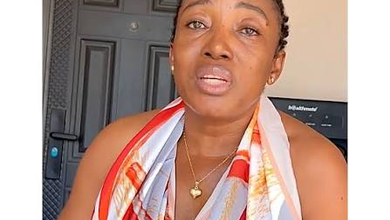
Hlengiwe Shakung had only come across the word “endometriosis” somewhere in a far distance. It meant nothing to her then. But a week of severe pain at the hospital in 2020 altered the trajectory of her life. She was diagnosed with endometriosis. In her interview with Najia Feminists Media, Hlengiwe narrated how she had never experienced period pains before until her 20’s. Slowly, chronic fatigue, heavy period bleeding, and pain creep in.
“I never had period pains for most of my life, not until my 20s. I was also very tired and didn’t understand why I was constantly tired,” the 30-year-old South African digital communications expert recounted.
Confronted by the silence around endometriosis and many doctors’ limited knowledge that frequently caused delayed diagnosis, she started a personal blog, “African Endo Warrior,” to make the illness visible and create awareness. Still, the disease controls her rhythm; she can only produce content on the few days she is well.

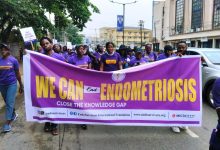
Dr Zainab Abdulsalam, a Nigerian medical doctor, defined endometriosis as “a chronic inflammatory condition where tissue similar to the lining of the uterus grows outside the uterus, commonly on the ovaries, fallopian tubes, bowel, or pelvic lining.”
Globally, endometriosis affects 10% of women of reproductive age, and it takes 7-10 years between symptom onset and confirmed diagnosis. Primarily, this is due to normalisation of period pain, medical misogyny, cultural silence, lack of awareness, and misdiagnosis. Endometriosis is a condition that affects the quality of life of patients, yet its exact cause remains unknown, and there is no cure for it.
Unlike Hlengiwe, Ajibola Bambose’s endometriosis journey began in adolescence. While she had painful periods attributed to heredity because her mother also experienced the same. Her menstrual experience changed when the period pains became debilitating cramps. At first, she managed it with pain medications, but both mother and daughter felt something more serious. Then, she underwent treatment for PCOS, but the pain persisted and intensified. She made repeated visits to the hospital, but her doctor insisted she only needed rest, nothing serious. Determined to be heard, Ajibola documented her symptoms every day for six months and went back to the hospital to defend her body and health.
“I monitored the symptoms for six months, went back and asked my doctor to give me time, to defend my body,” the conflict resolution specialist said.
Both Hlengiwe and Ajibola’s stories show how endometriosis is shaped by lack of awareness, medical misogyny, silence, and delayed diagnosis. Their experiences highlight the shared reality of women living with invisible illness and chronic pain. They face a society that internalises their pain and a health system that is slow to recognise it. To get noticed, they begin advocacy well before treatment.
Medical Misogyny, Cultural Silence, and Awareness
In Nigeria, two factors contribute massively to the delayed diagnosis of endometriosis; culture silence around menstrual health and medical misogyny. When menstruation is treated as a woman’s business, or a cultural taboo, open dialogue about abnormal symptoms of menstruation is discouraged. This led to the widespread, harmful belief that menstrual pain is a normal part of womanhood. Thus, women are taught to stoically endure this pain, leading to a delay in seeking medical care.
Attesting to this culture of silence, Tinude Mary, a 31-year-old endo warrior and gender rights advocate, recalled how a family member rebuked her when she started speaking publicly about her condition.
“When I began speaking publicly about my condition, a family member told me to stop talking about it because it is not something women are supposed to discuss openly.” Meanwhile, her then-boyfriend told her that “speaking openly about her condition could affect the way men see her.”
Ajibola also added that her Landlady always cautioned her against speaking openly about her menstrual experience because it’s a woman’s business. Yet, both women’s publicity of their conditions transformed into a strong online support community where more women were encouraged to speak openly about their condition and seek treatment.
Further hindering the timely diagnosis of endometriosis is the issue of medical misogyny. Many women with endometriosis are told that their symptoms are all in their head or that they are simply “overreacting.” This has led to delayed diagnosis, causing women to doubt their own experiences. In truth, many doctors dismiss a woman’s pain as “normal” period pain, while some are not even familiar with or interested in endometriosis. This health discrimination is not always explicit; it operates through the habits of prioritising fertility potential over present suffering, or associating endometriosis with common illnesses like stress, depression, and anxiety.
Dr Isioma Okolo, a gynaecologist and reproductive expert at NHS, Scotland, told Naija Feminists Media that medical misogyny is one of the central factors that shape diagnostic gaps of endometriosis. She explains that women’s health has historically received limited research attention, restricting knowledge and clinical prioritisation.
“The number one reason for delayed diagnosis is medical misogyny. It shows up in the fact that when you look at research, only 5% of research goes into women’s health. Endometriosis is not prioritised in medical training and residency, unless someone specialises in it, so awareness can be limited even among healthcare providers.”
Research showed that 80% of women have had their pains dismissed by healthcare providers, leading to delayed diagnosis and long-term health complications. Moreover, the normalisation of period pains as natural makes endo warriors endure years of chronic pain, suffering and, in some cases, infertility.
The pain of living with an invisible disease
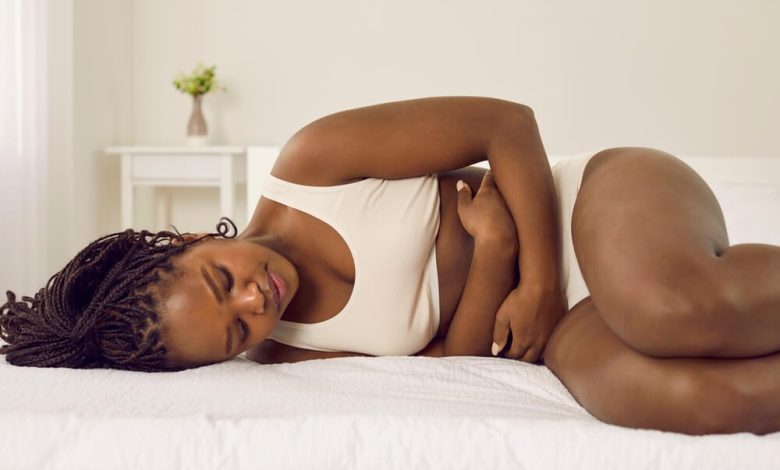
Pain is a daily reality of women living with endometriosis; it’s very unpredictable. It doesn’t matter if they are on their period, ovulating, or not; the reality is they’re only fine for a few days of every month. Hlengiwe described her pain day as a day of frustration, where her daily routine is disrupted, and life revolves around medication.
In the case of Ajibola, the pain is an unpredictable issue that sometimes occurs in her legs, stomach, or even a sharp pain in her back or vagina. She depends on painkillers to get relief. The situation is so intense that she sometimes cannot pick up anyone’s calls.
Beyond the physical pain, endometriosis is an invisible disease with no visible external symptoms, yet the patient experiences internal severe pain. Hlengiwe explained that the invisibility of endometriosis turned into an isolating condition that positioned endo warriors as lazy and abnormal individuals. For Ajibola, the invisibility means she can’t keep a 9-5 job because she can’t be committed, and stress is out of the picture.
Period Pain or A Public Health Condition: Clarifying Endometriosis’s Misconceptions.
Contrary to the belief that endometriosis is a reproductive condition, studies show it is a chronic inflammatory disease that affects multiple organ systems, including the digestive tract, lungs, and brain. Research also shows that women with endometriosis have higher rates of depression and anxiety than those who do not have the condition. They often experience fatigue and are at increased risk of developing cardiovascular disease.
Dr Isioma explained that “Endometriosis is a disease that affects the whole body, not just a gynaecological or female health organ disease. It’s a full-body condition. And for most women with this condition, they can also have very bad mental health issues with depression, anxiety, and low mood.”
Dr Toluwalogo Niji-Olawepo, a Nigerian doctor, explained that while endometriosis is primarily a reproductive issue because it affects women of reproductive age, it is not just a period issue. “It is a systemic condition that affects other parts of the body, depending on where the endometrial tissue is located outside of the uterus.”
Highlighting the brief suppression of endometriosis symptoms experienced during pregnancy, Dr Isioma opposed the idea that pregnancy cures endometriosis. Instead, she stated that “Pregnancy may reduce symptoms temporarily, but it does not eliminate the disease.
“Hysterectomy is not a cure for endometriosis. The condition is linked to hormonal activity from the ovaries, so removing the uterus alone does not remove the cause of the pain. Women may still experience symptoms even after a hysterectomy,” she added.
The gynaecologist also challenged the harmful belief that women can develop endometriosis through diet or personal choices. She stressed that endometriosis is not a result of a patient’s actions or failure, and there is currently no known way to prevent the condition. Instead, she reinforced that endometriosis is a medical condition, not a personal failure.
Access to healthcare and support
Among the major points the Endo Warriors interviewees agreed on are the financial burden of living with endometriosis and the need for access to the right gynaecologists. They collectively admitted that endometriosis is “an expensive disease.”
And the expenses incurred from laparoscopic surgery, medications, treatment, dietary requirements, and clinical visits are very costly. They had to use their personal savings, depend on family, and scrounge around for money because they couldn’t be fully committed to a 9-5 job due to the unpredictable nature of their illness. This greatly affects their access to healthcare.
The scarcity of gynaecologists who specialise in endometriosis is also a huge problem. In Nigeria, there are only 2,200 gynaecologists who attend to women. Even at that, not all of them are familiar with endometriosis. What this means is that many Nigerian women will experience medical misogyny, some will be misdiagnosed, others will suffer pain silently for years, and a few might die or develop infertility issues.
Overcoming Endometriosis: A Call for Reform
Odelia Thomas, the founding director of the St. Vincent and the Grenadines Association of Endometriosis, Adenomyosis and PCOS, an NGO based in the Caribbean, recommends that governments and health providers establish clear, efficient care pathways and referrals that enable endo warriors to access specialists.
“Healthcare providers, government and society need to invest in public awareness campaigns, improving healthcare training, and ensuring that diagnostic and treatment services are accessible and affordable,” Odelia said.
The NGO founder also suggests that accountability, a shift in healthcare culture, and standard patient-centred care should be used to address the medical misogyny that prolongs endometriosis diagnosis.
Meanwhile, Dr Toluwalogo told NFM that when women are educated about their bodies, keep a journal to document any changes, and use their voices to break the silence stigma. It will go a long way toward creating awareness of the disease.
“Speak up when you are in pain or when you notice that something is wrong, or even when you are just feeling uncomfortable about something. Speak up, go to the hospital, or confide in someone in the medical field, and seek help,” she said.
Similarly, reproductive expert Dr Isioma recommends systemic reforms in healthcare education and policy, as well as medical training, that will prioritise women’s health.
“Women need to know their rights and know their bodies. They should know they are always entitled to seek a second opinion,” she said.
Beyond their advocacy channels, Hlengiwe opined for a women’s support community where women can openly discuss endometriosis, be encouraged, and advocate for themselves within healthcare systems. Tinude also encouraged open discussion of reproductive health issues within families and society.