|
Getting your Trinity Audio player ready...
|
According to the 2018 Nigeria Demographic and Health Survey, about 31 per cent of women aged 15 to 49 have experienced physical violence, while 9 per cent have experienced sexual violence. However, reporting gender based violence is often only the beginning of a survivor’s search for justice. For many survivors, the challenges do not end after speaking to the police or seeking medical care. Gaps in legal support, stigma and weak response between institutions can all stand in the way of accountability and recovery.
Against this, Amnesty International has partnered with lawyers in Imo State to strengthen legal responses to gender based violence (GBV), with a renewed focus on ensuring that survivors receive timely, coordinated and survivor-centred support, on the 8 and 9 of July
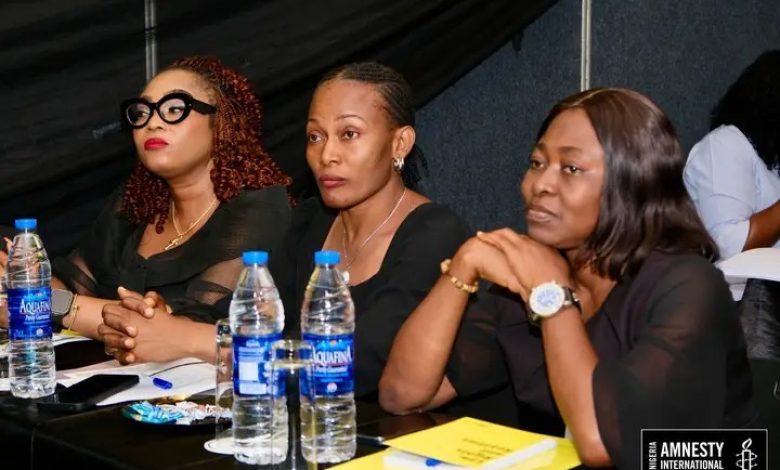
The two days training, held in Owerri, brought together members of the International Federation of Women Lawyers (FIDA) and other legal practitioners to improve their understanding of referral pathways, survivor protection, evidence gathering and media engagement in GBV cases.

Speaking during the training, Amnesty International’s Human Rights Education Officer, Helen Addah, said that “strengthening legal responses is just as important as having laws on paper.”


She stressed the need for existing policies to be properly implemented, particularly through Sexual Assault Referral Centres, where survivors can access medical, psychosocial and legal support.
“There’s a need to ensure that the policies and laws on gender-based violence are put into use, especially the Sexual Assault Referral Centre where survivors access all the services needed to stabilise them,” Addah said.
Resource person Rosemary Hamza described referral pathways as central to an effective response to GBV, noting that poor coordination between service providers can delay access to care and leave survivors without the support they need. She encouraged legal practitioners to strengthen documentation, collaborate across sectors and ensure that survivors are connected to appropriate services without unnecessary delays.
Former Chairperson of FIDA, Ndidi Anike Val-Okeoma, said the training would enhance lawyers’ capacity to respond to GBV cases while improving public understanding of referral systems available to survivors.
For many women, the challenge is not whether laws exist but whether they work when they are needed most. Training such as this may strengthen the capacity of legal practitioners, but ensuring that survivors can access justice without fear, delay or institutional barriers remains the larger test.
As conversations around gender based violence continue across Nigeria, improving legal responses is essential, not only to hold perpetrators accountable, but also to ensure that survivors are heard without judgement and supported throughout the justice process.