|
Getting your Trinity Audio player ready...
|
One of the biggest misconceptions of the century is that femicide happens as a singular event and not as a coalesce of a series of abusive behaviours over time. Often, when conversations about femicide are had, we intentionally forget to mention the abuse, the narcissism, the manipulation, and the coercion.
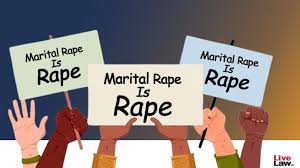
It banks on the power of female socialisation, which teaches women to please men and make them happy by being a “good” —friend, girlfriend or wife. Marital rape doesn’t just “happen.” It’s not some sudden outburst of passion or a misunderstanding. It’s the slow, calculated unravelling of a person’s right to say no—chipped away by coercion, manipulation, and the cruellest lie of all: “This is what love looks like.”
It starts small. A guilt trip here: “If you loved me, you’d want to,” a silent treatment there: “Fine, sleep on the couch then.” Maybe he doesn’t hit you—not yet—but he owns your hesitation, your discomfort. He spins it into something you should apologise for. Over time, your “no” gets quieter. Your body stops feeling like yours. And one day, the coercion isn’t just emotional anymore. It’s his hands pinning you down, his voice in your ear: “You’re my wife. You don’t get to refuse me.”
That’s marital rape. Not a crime of lust—a crime of power. And the men who do this? They don’t stop. Because control is a drug, and once they’ve tasted it, they’ll escalate to keep it. If you threaten that control—by leaving, by speaking up, by existing as a person instead of a possession—their rage can turn lethal. “If I can’t have you, no one will” isn’t a movie line. It’s the last thing thousands of women hear before they’re murdered by the men who claim to love them or the coded slur version— “bitch.”


Although marital rape is still grossly underreported in Nigeria, the recorded cases are staggering. According to the 2018 Nigeria Demographic and Health Survey (NDHS), a whopping 14% of Nigerian women (ever-married, aged 15-49) have experienced marital rape at some point in their lives, with 4.7% reporting it within the 12 months preceding the survey (NPC & ICF, 2019).
We don’t talk about this enough. We call it “drama” instead of torture. We ask, “Why didn’t she leave?” instead of “Why did he rape and kill her?” Forgetting that with no legal restrictions and a society’s lackadaisical attitude to these issues, women trapped in marriages and relationships find it hard to speak up for help in a society that will only point them back to their abuser.
But change isn’t just about escaping. It’s about dismantling the entire system that tells men they’re entitled to women’s bodies—and that marriage or proximity to women is a free pass to take what they want.
This isn’t just about laws (though goddess knows we need better ones). It’s about refusing to normalise the slow bleed of coercion that leads to rape and the rage that leads to graves. It’s about calling it what it is: femicide. Not a “crime of passion.” Not a “tragedy.” A predictable, preventable end to male violence against women and girls.
Note: This story was written by Jenifatu Yakubu and Egbo Maryjane.