Reviewing the Essentials of Women’s Autonomy in ‘Americanah’
|
Getting your Trinity Audio player ready...
|
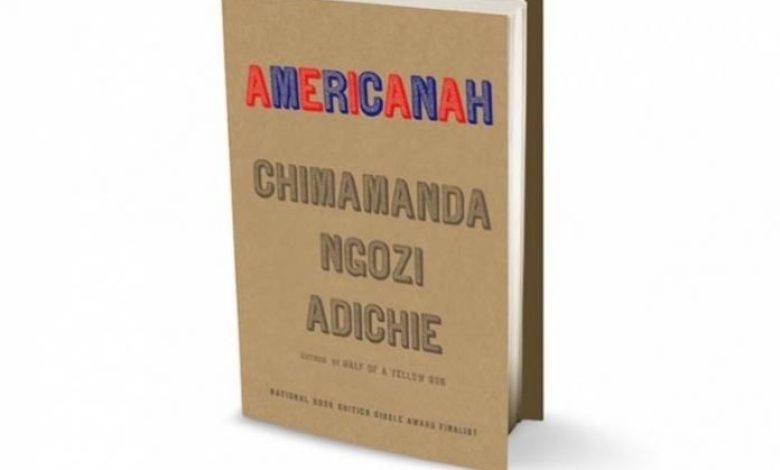
Summary: In Americanah, Chimamanda Ngozi Adichie tells the story of Ifemelu, a young Nigerian woman who left Nigeria and her first love, Obinze, to pursue an education and a life of her own in the United States. The novel explores themes of identity, feminism, hair, patriarchy, love, and sisterhood.
In Americanah, Chimamanda Ngozi Adichie added an extra layer to nuanced African immigration literature. She spotlighted feminism at the intersection of African hair, race, economic autonomy, and the performance of the good wife. Chimanmada frames Americanah not as a romance between Ifemelu and Obinze, but as Ifemelu’s journey toward liberation in a world that constantly tries to silence her.
The novel is centred around Ifemelu, a young Nigerian woman who left Nigeria and her first love, Obinze, to seek an education and life of her own in the United States. There, she experiences academic success but also grapples with the weight of being a black woman, patriarchy, and an identity crisis. Eventually, she launched a popular blog titled Raceteenth or Various Observations about American Blacks, where she critiques American racial dynamics from an outsider’s perspective.
The novel’s greatest feminist triumph is Ifemelu’s voice. She is an outspoken woman who is relentlessly honest in expressing her thoughts and feelings. This trait contradicts the male characters in the novel, who expected her to be reserved and girly. Through her, Chimamanda rejects the patriarchal theory that being docile makes one likeable. Ifemelu’s blog also acts as an intellectual reclamation where she refuses to be a silent observer in a culture that seeks to marginalise her twice over as a Black person and as a woman.


Chimamanda brilliantly uses Black women’s natural hair as a central feminist metaphor. For an explicit purpose, the scenes in the hair salon serve as a sacred space for female dialogue, while Ifemelu’s transition from chemical relaxers to her natural kinky hair represents shedding the male gaze and Eurocentric beauty standards. It is a literal and figurative rejection of the idea that a woman’s body must be managed to be professional or attractive. She also critiques hair relaxers on her blog. There, she noted that relaxing your hair is like being in prison, where you’re always worrying about the rain. Ultimately, her choice represents a woman’s bodily autonomy.
The novel doesn’t just celebrate women; it critiques the ways they are socialised to compete. We see the contrast between Ifemelu’s agency and Aunty Uju’s survivalist pragmatism, or Kosi’s performance of the “perfect wife.” Adichie uses these relationships to examine how patriarchal structures force women into different modes of compromise.
In Americanah, Chimamanda presents sisterhood as a complex web of mentorship, shared struggle, and the sometimes painful honesty required to keep one another grounded. Many of the female characters drop the patriarchal masks they wore at a female haven. For instance, the braiding salon in Trenton spotlights a temporary sisterhood. There, the women shared their experiences of black womanhood, skin lightening, and the frustrations of immigration. Between Aunty Uju and Ifemelu, the latter saw her aunt lose herself to men’s needs, then used her as a roadmap not to do the same. Their relationship is a study on how sisterhood can be a deep love and deep disappointment. On the brighter side, Obinze’s mother is the intellectual star who provides the foundation for her feminist development. Living in a society that encouraged women to be small, Obinze’s mother was a professor who occupied space with her mind. She treated Ifemelu as an intellectual equal when she was just a teenager, and also made her realise that her opinions were valuable. This early validation gives Ifemelu the courage to start her blog and directly oppose patriarchal structures. She also rejected the Brazilian weaves for her natural hair, an echo of a trait she first saw in Obinze’s mother.
Ultimately, Americanah is essential feminist literature because it rejects the traditional ending of a happily-ever-after romantic relationship. Instead, it chose to prioritise the sovereignty of the female voice. Chimanmada successfully dismantles the myth that a woman’s journey is defined by the man she ends up with; rather, she shows that Ifemelu’s true homecoming is her return to her authentic, unmasked self.
By unapologetically centring themes of bodily autonomy, intellectual independence, and the rejection of performative femininity, the novel serves as a powerful manifesto for any woman who has been told she is too much, too loud, or too difficult. It is a profound celebration of the strong head, proving that a woman’s most revolutionary act is to remain the undisputed protagonist of her own story.