|
Getting your Trinity Audio player ready...
|
Summary: Lydia, a Pan-African feminist, creative, and technologist, speaks on the gender digital divide, digital literacy as a tool for gender justice, and building inclusive feminist movements that leave no woman behind.
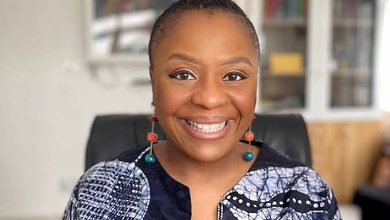
Lydia Mark is a Pan-African feminist, creative, changemaker, and technologist who sees media, communications, and technology as tools for creating sustainable social impact, especially for women and girls across Africa.
With five years of experience in tech and a growing focus on policy development and analysis, her work is anchored in digital gender justice and the urgent need to close the gap that leaves African women behind in an increasingly digital world.
In this conversation with Naija Feminists Media, she traces a feminist consciousness that began at age six, unpacks the systemic forces that exclude women from the digital economy, and makes a compelling case for a feminism wide enough to hold every kind of feminist.
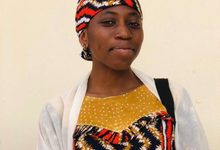

Insights from Lydia on the Gender Digital Divide, Policy Reform, and Radical Feminist Solidarity
1. When and how did you personally come to feminism? Was there a moment, experience, or process that shaped your feminist consciousness?
This is interesting because, technically, I would say 2015. That was the point at which I had access to my own phone and could spend hours on the internet, reading about the history and development of feminism as a cause, what it entailed, and what feminist women often did. That was when I formed the active consciousness that I am a feminist and want to identify as such.
However, I have always been a feminist. I grew up in an extremely religious and conservative, close-knit community, which meant that as a child, I saw firsthand how much subjugation and subservience a woman had to endure to be, and remain, a wife. I saw how women were shamed and stigmatised for not getting married—the prayers, the pressure—and how much worse it was to dare leave after getting married.
I remember, at age 6, feeling afraid that I could never cope with what I saw as normal for women to face as wives. I wondered where I could go, in shame, when I eventually had to leave, because I was sure I could never cope as a wife, and marriage felt compulsory then.
So I decided I was going to be a human rights lawyer focused on helping women and girls, and partner with international organisations to at least make it okay for women to stay unmarried or leave their marriages. That was the start of my feminist consciousness—from age 6.
2. What issues affecting women and girls are you most focused on right now, and why do you believe these issues require urgent attention?
I am intrinsically a social impact advocate, with a core focus on SDG 5: targets 5.5, 5a, 5b, and 5c. Having spent five years working in tech, I am inclined to believe that the world is headed towards a digital transformation-led global economy. This is what informs and fuels my prioritisation of digital gender justice, with a core focus on:
The Gender Digital Divide: closing the disparity in access to and use of the internet and digital technologies, between men and women, which I believe is best addressed by closing the gender digital literacy gap and designing and enforcing policies that ensure equal digital access.
The Gendered Labour of the Tech Industry: women make up only 28% of the global tech workforce, which is a significant disparity. In Africa, despite producing the highest female STEM graduates globally, only 30% of STEM roles in sub-Saharan Africa are held by women. In the African tech funding ecosystem, only 0.9% of the $3.2bn total funds raised in 2025 went to women-led teams.
Gender-Just Tech Policies: which explore the algorithmic and data biases that (un)consciously shape the development of technologies, as they amplify—and in some cases create—harmful gender stereotypes and prejudices.
It is easy to dismiss these as abstract or sensational figures, but this is first and foremost a human rights issue, and also an economic one. There is untapped economic potential in Africa as women and girls continue to be excluded in an increasingly digital world.
I believe these are matters of urgent global attention because, according to the World Economic Forum, by 2030, many current roles will either no longer exist or require new, largely digital skill sets to remain relevant. If African women—and African societies more broadly—are not adequately equipped ahead of this shift, then not only will a digital transformation–led economy amplify gender inequality across sectors, it could also lead to a regression in feminist progress so far.
3. From your perspective, which law, policy, or systemic change should be prioritised to improve the lives of women and girls, particularly in Nigeria or your community of work?
For me, a key priority in Nigeria would be a law that mandates and ensures implementation and monitoring of practical digital literacy and innovation across all schools, including and especially government-owned, as a structured and progressive curriculum throughout the first 15 years of education.
I believe that early exposure to these technologies—with hands-on experience not just in using them, but in building with them—will position girls ahead of the future of work. It will also enable them to pursue tech-enabled careers across diverse fields, including fashion, medicine, academia, and beyond.
5. What does feminist solidarity and collective action look like to you, and what message would you like to share with younger or emerging feminists?
Feminist solidarity, to me, is feminist women banding together to solve the primary problem—patriarchy—instead of (unconsciously) upholding patriarchal standards within feminist circles. We need every feminist: the “bitter” feminist, the shy feminist, the angry feminist, the so-called “misandrist”—you name it. We need them all.
I have four things to say:
Feminism is non-linear and non-monolithic. As such, contradictions from a feminist woman are not always grounds for discrediting her feminism; often, they reflect where she is in the process of unlearning internalised misogyny.
Showing grace is not limited to situations involving a patriarchal woman. Feminist women can be flawed in their approach and still deserve grace—especially from other feminist women—despite those flaws.
Achieving sustainable feminist success will require a multi-stakeholder effort, where every feminist is needed: feminist social scientists, feminist economic development workers, feminist lawyers, feminist policymakers, feminist doctors, feminist everything you can think of. These are the women who will work on the different elements that make up the gender-just and equitable future we all seek.
For younger feminists, I would share something I learned a little too late: never, under any circumstance, negotiate your feminist stance with a man—or even a patriarchal woman. This can look like over-explaining yourself, trying to teach or convert them, or justifying your feminism. They know what they are doing, and you will never be “good enough” on those terms.