Reclaiming Female’s Mobility in Otobong Tom’s Mobility in Girls Don’t Travel Just for Flowers
|
Getting your Trinity Audio player ready...
|
Summary: Girls Don’t Travel Just for Flowers tells the solo travel experience of Ayanti, a young African woman. Through the navigation of foreign lands, Ayanti develops a courage that dismantles internalised fears and societal discouragements, proving women’s resilience and capability independent of a male protector.
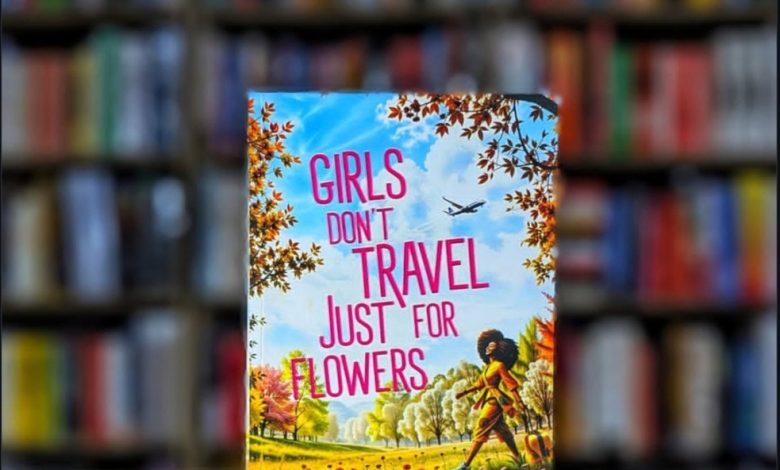
In African culture, when a woman travels alone, she is met with suspicion or seen as a transgressor of societal order. This discrimination led to the denial of African women’s autonomy and mobility. The same culture also expects the woman to wait for a male figure to take her to foreign lands because they believe women only travel for flimsy things. Otobong Tom’s novel title, “Girls Don’t Travel Just for Flowers” is a direct jab to these stereotypes. The protagonist, Ayanti’s travel was not a luxury or a hobby; it was a radical act of reclaiming her autonomy and mobility, and of prioritising her happiness.
Girls Don’t Travel Just for Flowers is centred around Ayanti, who rejects the African patriarchal culture of waiting for a male figure to show her the world. The journey from her small village to countries like Dubai and Jeddah represents a feminist exit from confined domestic duties to liberation. Her travel is simply a transformative tool for self-discovery. By navigating foreign lands alone, Ayanti develops a courage that dismantles internalised fears and societal discouragements, proving her resilience and capability independent of a male protector.
A central feminist takeaway is the rejection of self-sacrifice. The author argues that happiness is a necessity, not a luxury. It encourages women to fiercely protect the joy they create for themselves, placing their emotional well-being at the centre of others. For Ayanti, travel is a pursuit of knowledge and self-discovery. The novel ultimately turned a woman’s travels from a passive tourist to an active explorer of her own mind.


During her travels, Ayanti rejected the stereotype that she had to forsake her African identity to fit into the foreign lands. Instead, she proudly wears her Afro and dances in her Ankara outfits. Through her, Otobongo proves that a woman can be deeply traditional in her roots while being global in her mindset. In a nutshell, Ayanti’s Afro and African identity signifies to the world that she hasn’t travelled to escape her African identity, but to show the world what a modern African woman looks like: unapologetic, adventurous, and free.
Beyond presenting Ayanti’s travel as a transformative tool for self-discovery, Otobongo demonstrates women’s ability to work, save, and spend their own money on whatever they want, rather than just traditional assets or dowry-related items. It is also a celebration of female economic power and financial freedom.
In between ancient times and the present, Otobongo’s novel challenges the systemic barriers that prevent a woman’s solo travel, to the perceived green passport struggle of African women, making Ayanti’s successful arrival at each destination a victory against both gender and geopolitical limitations. Girls Don’t Travel Just for Flowers is far more than a travel memoir; it is a rigorous, joyful experience that reclaimed a female narrative. Through Ayanti’s journey from the confines of a small village to the lands of Dubai and Jeddah, Otobong effectively dismantles the archaic African proverb that a woman’s feet are meant only to walk the path between her father’s house and her husband’s kitchen.
Ultimately, the book serves as a necessary reminder against the permission culture that confined tethered African women to domestic duties. It argues that a woman’s mobility to explore and exist in the spaces she wants is one of the core feminist liberations. The book’s title itself remains an urgent feminist critique. It reminds us that women do not travel to be “flowers” in someone else’s garden; they travel to be the architects of their own geography. For every girl told to wait for a husband to show her the world, this memoir serves as a loud, clear, and uncompromising rebuttal. It is a call to action for every woman to stop being a passenger in her own life and to start moving toward her own horizon, on her own terms, with her own money, and for her own soul.