An Illusional Patriarch: Reviewing the Secret in “The Secret Lives of Baba Segi’s Wives”
|
Getting your Trinity Audio player ready...
|
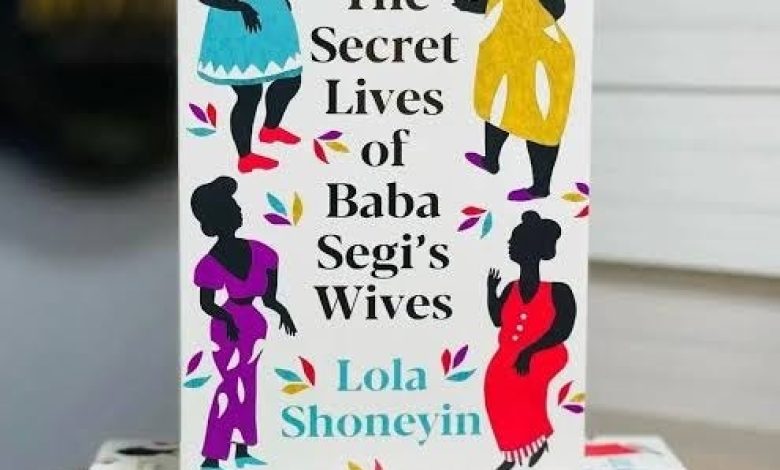
Summary: The Secret Lives of Baba Segi’s Wives is a satirical novel about a patriarchal man whose identity is tied to his wives and children. The author, Lola Shoneyin, successfully dismantles the myth of a woman being solely responsible for barrenness. She used Baba Segi’s wives to demonstrate how women can successfully own their agency without any glitches
In “The Secret Lives of Baba Segi’s Wives, Lola Shoneyin delivers a stinging, satirical critique of patriarchal structures. While the novel centres on the Alao household, it unfolds a feminist manifesto that strips away patriarchal power and affirms women’s agency and reproductive control. Technically, the novel presents a polygamous household with a series of dramatic occurrences, but an insightful reading showed women who refused to be submissive to patriarchal doctrines.
The story revolves around Baba Segi, a prosperous patriarch who prides himself on the submission of his three wives and seven children. The household’s delicate balance is disrupted when he brings home a fourth wife, Bolanle, a university graduate. It was then that his perfect patriarchal authority was reduced and his infertility exposed. His older wives—Iya Segi, Iya Tope, and Iya Femi —had children with men outside marriage.


The novel’s most profound feminist act is its deconstruction of the patriarch, Baba Segi. He is the revered head of the home, who measures his worth by the number of wives he owns and children he believes he has sired. However, the author employs a sharp irony to render him an incompetent patriarch. By revealing his infertility, the narrative exposes that his perceived power is an illusion, a performance maintained only by the secrets of the women he thinks he controls.
The novel dismantles the traditional idea of male dominance by exposing the fragility of the perfect man. Baba Segi’s power and authority are an illusion, one that has been manipulated quietly by his wives to survive a patriarchal society that would have blamed and discarded them for his own infertility. Another radical feminist manifesto in the novel is the refusal of Iya Segi, Iya Tope, and Iya Femi to be passive, submissive wives. They took control of their reproductive choices. Their secret lives and double lives are acts of survival and subversion against a society that equates a woman’s value solely with her fertility. Their decision to seek children elsewhere is a radical reclamation of their reproductive autonomy. Rather than being labelled as barren women, their reproductive choice becomes a revolutionary act of self-preservation, ensuring their security and place in the home.
The word “secret” in the novel’s title proffered a double meaning for Iya Segi, the first wife, who uses her business acumen to achieve a degree of financial independence. She had earlier recognised that economic power is a major essential in a patriarchal society. Through her economic independence, she was able to negotiate the household rulings and possess matriarchal power.
Bolanle’s arrival as a university graduate serves as the catalyst for the household’s collapse. While the older wives see her as a threat to their status, her presence represents the liberatory power of education. Bolanle’s literacy and exposure to modern thought enable her to question the superstitions that govern the home and, eventually, give her the strength to walk away. Her departure at the novel’s end is a triumph of self-actualisation, proving that a woman’s identity need not be anchored to a husband or a home.
Ultimately, the novel’s feminist power lies in its refusal to leave its women in the shadow and mercy of patriarchal doctrines. The author did not just dismantle the patriarchal status quo; she did so in a humorous, unexpected way.
By stripping Baba Segi of his reproductive myth, she strips the system of its moral authority, revealing that the true engine of the household was always the resilience and strategic cunning of the women. The book is a triumphant feminist assertion that even within the most suffocating structures, women are never truly passive; they are architects of their own survival. It is a vital, insightful feminist literature that a woman’s worth is never measured by the man she marries or the society’s doctrines, but by the agency she reclaims.